Alaska villagers and archaeologists race to save ancient artifacts
Summary and headline written by AI from the source article. How we work
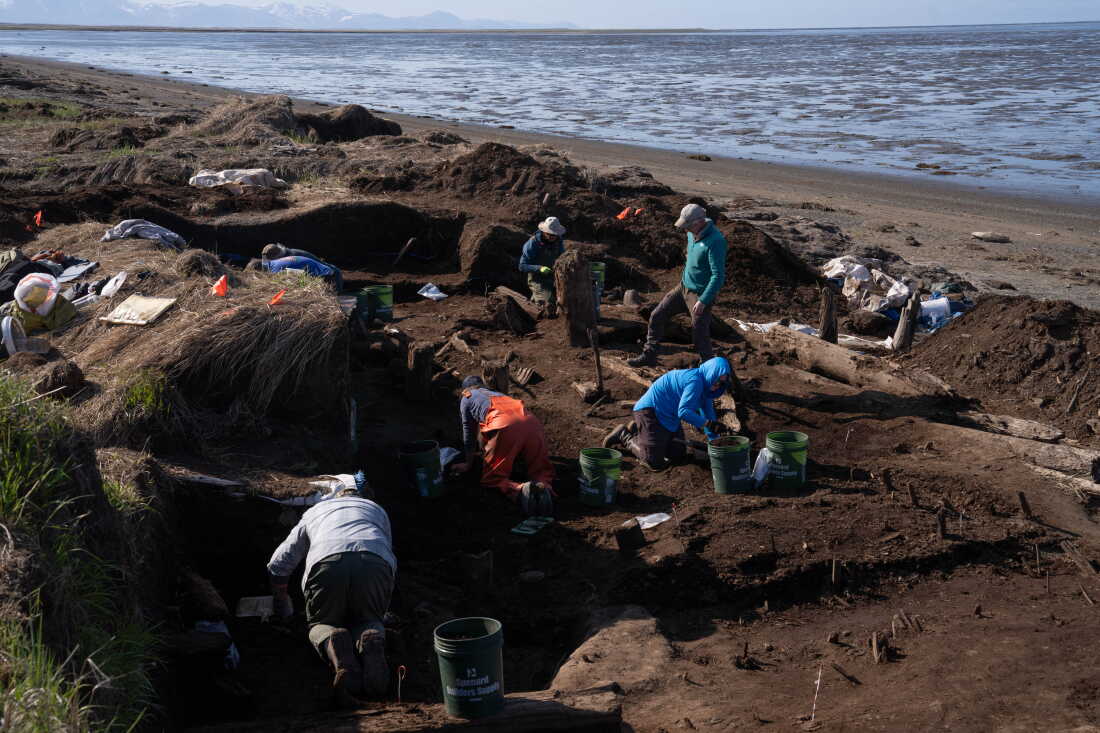
Residents of Quinhagak, Alaska, and a team of archaeologists are working to save artifacts unearthed by last October’s Typhoon Halong.
The storm damaged the village and exposed a significant archaeological site called Nunalleq, which contains well-preserved Yup’ik cultural objects dating from 400 to 600 years ago. Jenny Matthew discovered a wooden bowl on the beach after the storm, prompting concern for the site’s vulnerability. Archaeologist Rick Knecht has led excavations at Nunalleq since 2009, after thawing permafrost revealed many artifacts.
The community decided to preserve these objects as a link to their heritage. The team has recovered hand-carved animals, tools, and pieces of kayaks, benefiting from the frozen ground’s ability to preserve organic materials. However, the storm accelerated erosion and brought the Bering Sea closer to the dig site. At high tide, seawater now reaches the excavation pit. The team is currently relying on volunteer labor and limited funding to recover artifacts before the next storm arrives.
They hope to return next summer, pending fundraising through GoFundMe and Quinhagak Heritage Inc., a local nonprofit. Elizabeth Church, director of the nonprofit, believes access to these artifacts strengthens the community’s connection to its resilient ancestors.