Celtic coin hoard shatters record in Germany
Summary and headline written by AI from the source article. How we work
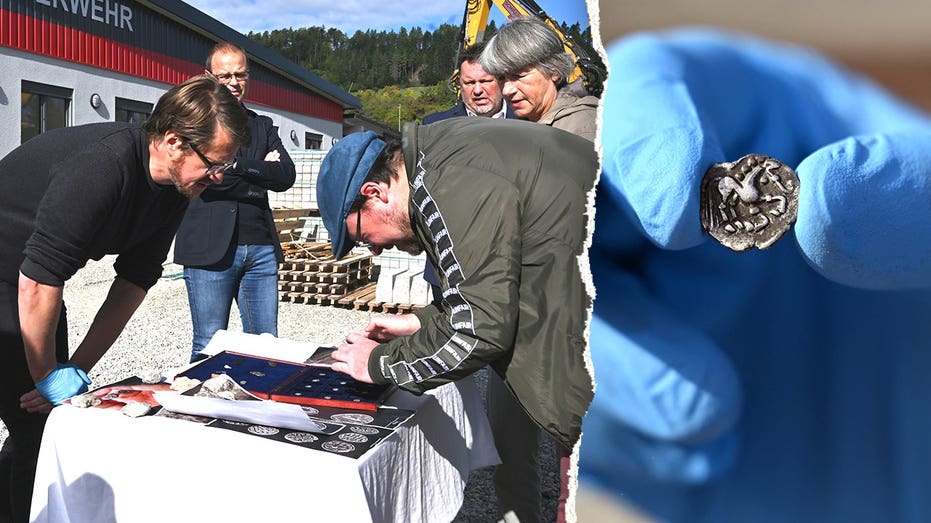
Archaeologists in Thuringia, Germany, uncovered eleven ancient Celtic coins during excavations at a former sports field.
The Thuringian State Office for Monument Preservation and Archaeology reported the find, made while preparing the site for a new fire station. Dating to the first century B.C., the coins are a type of currency called Prague-type quinarii and represent the largest Celtic coin hoard from that period ever discovered in the region.
Previously, experts had identified only around 80 of these coins in Thuringia, making this discovery particularly valuable. Researchers believe the coins were originally stored in a container made of organic material that has since decayed and were scattered by plowing. The find offers insight into ancient trade routes and production centers, as the mint creating the coins likely operated in the nearby Gotha region.
Alongside the Celtic coins, archaeologists also found a Roman coin, a medieval glass bead, and artifacts from more recent periods, including a knife fragment, a silver coin, and a uniform button. Officials stressed the importance of documented archaeological work over unregulated metal detecting to preserve historical context.


