Historian reclassifies ancient gold medallions as diplomatic gifts
Headline and summary by local AI
Historian Marco Cristini identified a pair of gold medallions as high-value diplomatic gifts rather than low-quality copies.
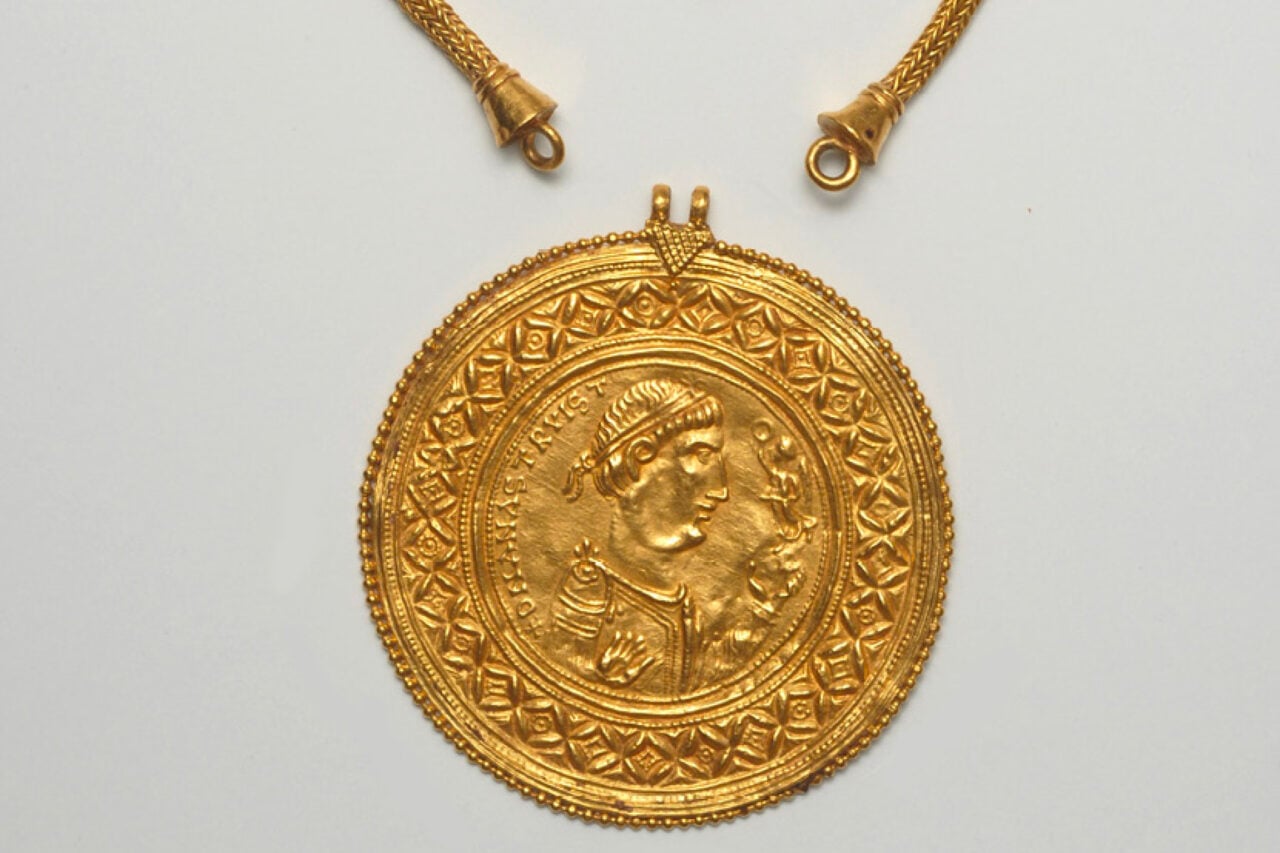
Cristini discovered the artifacts while visiting the Dumbarton Oaks Museum in Washington D.C. Although previous experts labeled the items as unofficial "pseudo-medallions" of little value, Cristini argued that the craftsmanship and historical context suggest a different purpose.
Cristini published his research in the journal Frühmittelalterliche Studien, explaining that East Roman emperors used these items as tools of soft power during the early sixth century. He used epigraphic analysis to determine that the inscriptions on the pendant referred to a ruler of the Lazi, an ethnic group located near the Black Sea. The pendant features a portrait of Emperor Anastasius on one side and a mythological scene of Dionysus on the other.
Earlier scholars dismissed the artifacts because the Latin inscriptions did not match standard coin legends and the emperor's portrait lacked classical naturalism, showing features like a double chin. Cristini countered that these traits appear in other authentic medallions from the era. He also linked the find to a text by the chronicler John Malalas, which describes a Lazi king receiving a ceremonial gift to secure an alliance with Constantinople.
Cristini suggests these finds may prove the early medieval period was a sophisticated era of cross-cultural diplomacy rather than a period of artistic decline.
Selected and summarized by local AI How we work