Astronomers discover mysterious red dots in early universe
Summary and headline written by AI from the source article. How we work
A team led by Vasily Kokorev at the University of Texas, along with partners at several international institutions, identified a new class of bright red objects in images from the James Webb Space Telescope.
When the Webb telescope began observing the early universe, it revealed numerous luminous red dots that scientists had never seen before. Kokorev’s team focused on one dot, designated GLIMPSE-17775, and used the telescope’s infrared sensitivity, enhanced by gravitational lensing, to analyze its light spectrum in detail.
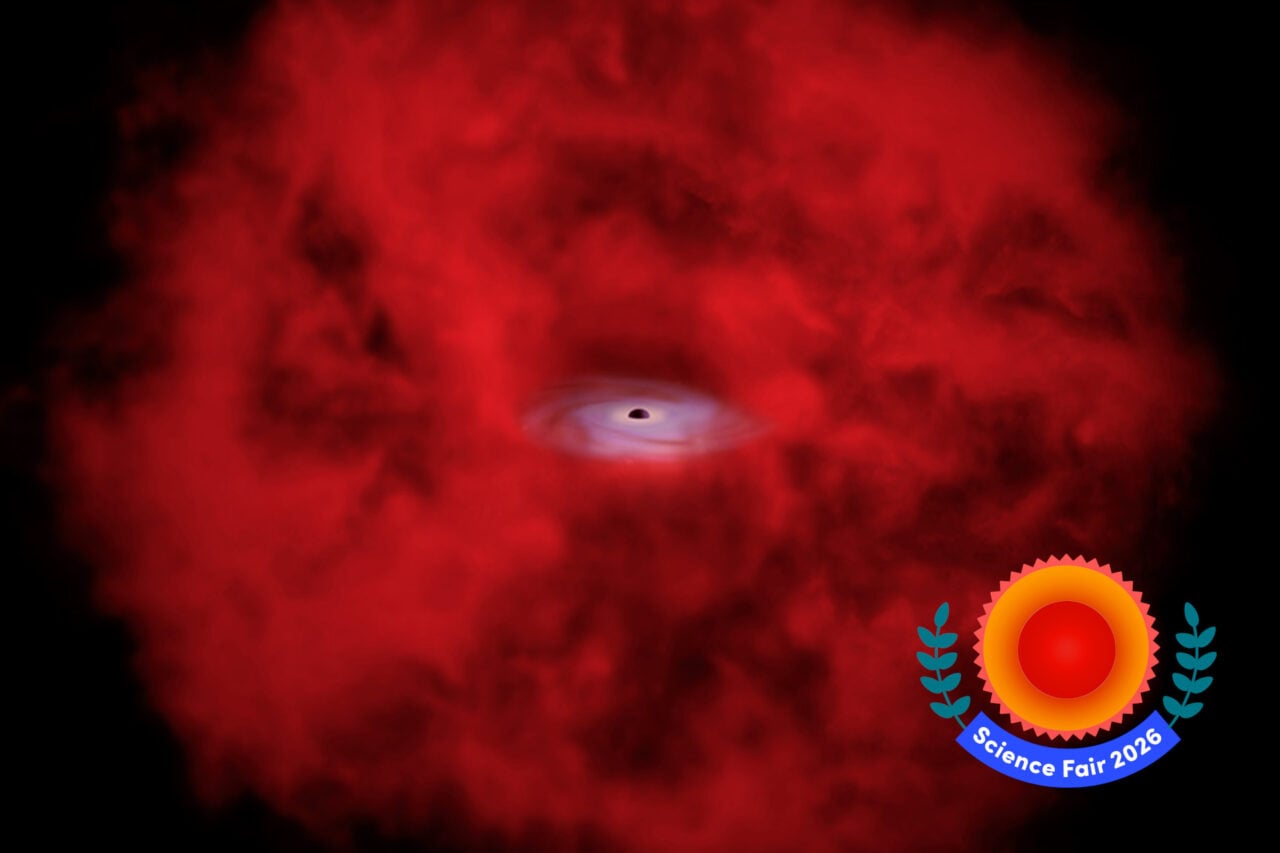
The analysis revealed that these dots likely represent “black hole stars,” rapidly growing black holes surrounded by thick clouds of gas. These objects share characteristics of both stars and black holes, presenting a puzzle for astronomers. Jorryt Matthee of the Institute of Science and Technology in Austria explained that these dots are a million times more luminous than any previously known star, prompting questions about their formation and growth.
The discovery suggests that black holes and galaxies grew at a much faster rate than previously understood between 500 million and 1.5 billion years after the Big Bang. Researchers are now working to understand the population of these objects and the detailed physics behind them, hoping to gain a clearer picture of the early universe.
Anna de Graaff of the Max Planck Institute for Astronomy emphasized the excitement of finding a truly new type of object and the collaborative spirit driving this research.