Scientists identify 240 million year old amphibian fossil found in Australian garden
Headline and summary by local AI
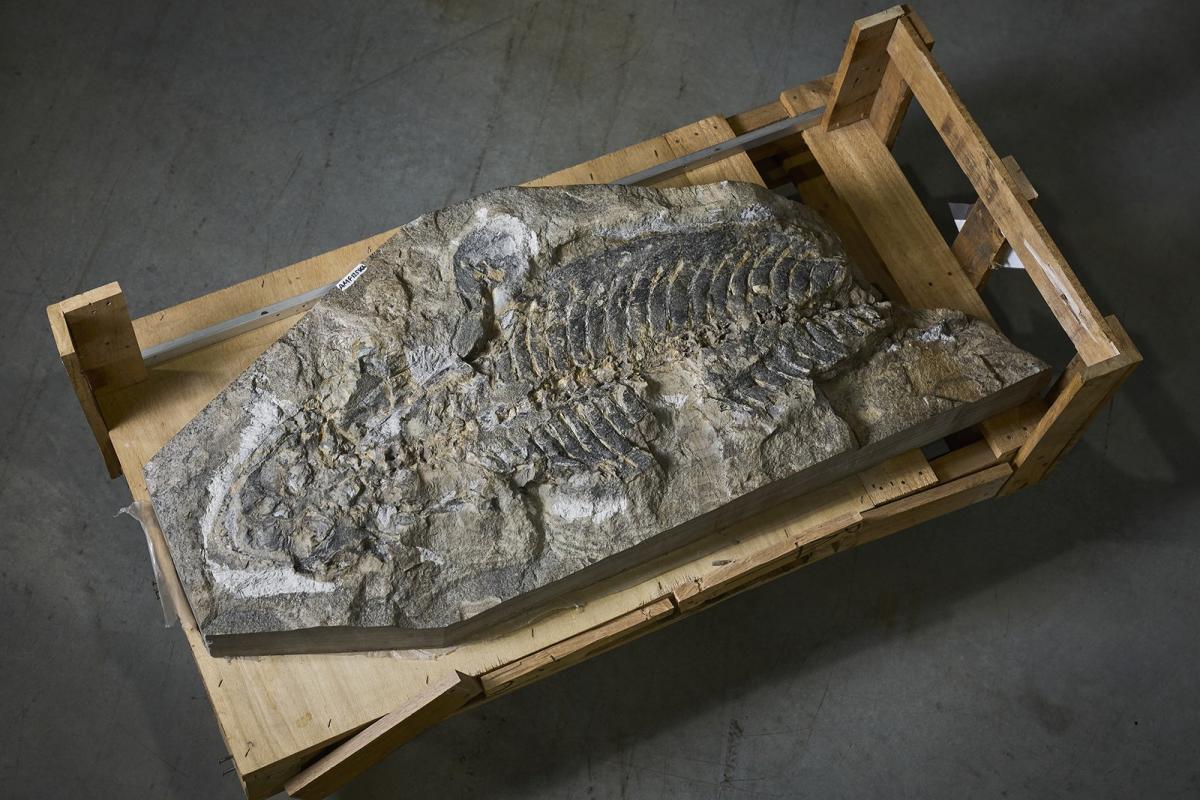
A landscape designer named David King discovered a fossilized amphibian while building a retaining wall in a garden in New South Wales, Australia, in 1996.
The specimen belonged to a prehistoric creature that lived more than 240 million years ago during the Triassic period. The owner of the property, Mikhail Mykhailidis, reported the find to the Australian Museum in early 1997.
Lachlan Hart, a 12 year old boy who saw the fossil on display at a museum in 1997, eventually became a researcher who studied the specimen for his doctoral work. After Mykhailidis donated the fossil to the museum in 2000, Hart spent nearly two decades researching it.
His work led to the official identification and naming of the species as Arenaerpeton supinatus, which means "sand crawler lying on its back." Researchers at the University of New South Wales and the Australian Museum determined the animal lived in freshwater rivers in the current Sydney Basin. The creature measured about 1.2 meters from head to tail and possessed a massive body with large, tusk-like teeth on its palate.
The fossil is rare because it preserved the head and torso together, including outlines of the skin. Matthew MacKerrie, a curator at the Australian Museum, called it one of the most important fossils found in New South Wales in the last 30 years.
Selected and summarized by local AI How we work
Discovery: Archaeology, new knowledge of art, culture and history, forgotten history uncovered, something lost restored.