Uzbekistan plants trees to fight desert erosion
Summary and headline written by AI from the source article. How we work
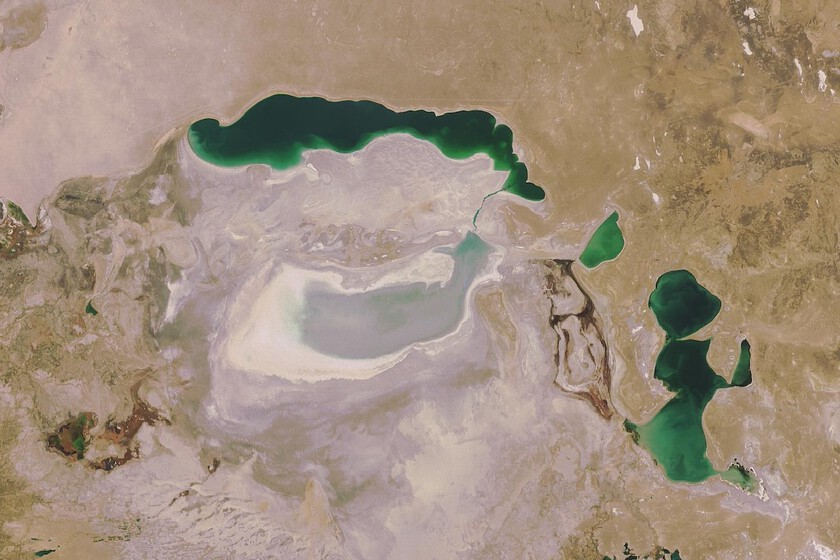
In the 1960s, the Soviet Union diverted rivers feeding the Aral Sea, between Kazakhstan and Uzbekistan, to irrigate cotton fields. This caused the sea to shrink dramatically, leaving behind the Aralkum desert covered in salt and dust.
By the early 1990s, the sea had split into the Aral North and Aral South, and by 2004 its volume had decreased by 91%.
Uzbekistan now focuses on preventing erosion from the exposed seabed by planting millions of shrubs instead of trying to restore the lake itself. Initial attempts to restore water flow failed due to Soviet-era dams and continued demand for cotton. However, a project began in 2018, led by then-President Mirziyoyev, to reclaim the dry lakebed and prevent harmful dust storms.
The country chose the saxaul shrub, a native plant with deep roots that can hold large amounts of water and tolerate salty conditions, for this purpose. As of mid-2024, Uzbekistan had planted over 1.73 million hectares of forest in the Aralkum desert, with plans to cover another half million hectares in the next five to six years. They use tractors to create planting trenches and airplanes to spread seeds, and local residents assist with seed collection and planting.
Kazakhstan is undertaking a similar effort, planning to plant saxaul on 1.1 million hectares by 2025. While the project has reduced degraded land from 30% to 25% in four years, plant survival rates vary depending on rainfall, ranging from 50-70% in wet years to 30% in dry years.


