A Galician explorer became king of the jíbaros in the Amazon
Headline and summary by local AI
Alfonso Graña, a man from the Galicia region of Spain, became the self-proclaimed king of the Jíbaros people in the Peruvian Amazon.
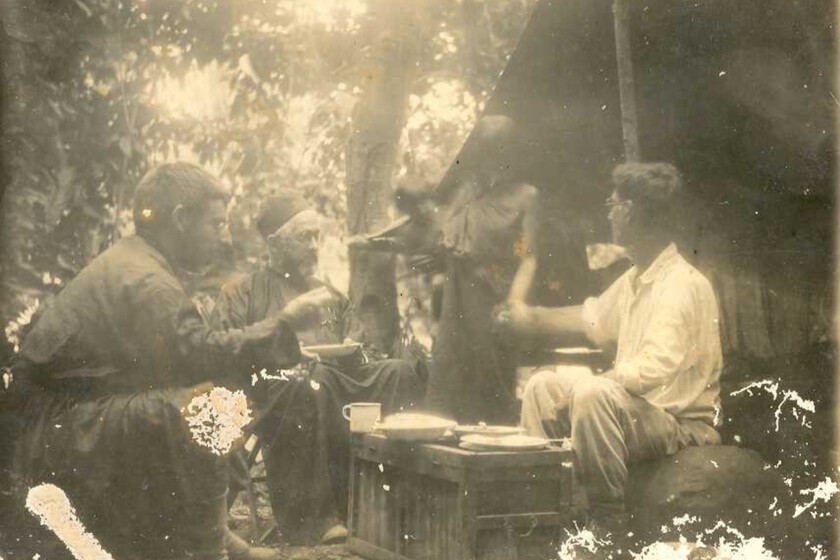
Graña moved to Iquitos, Peru, in 1910 to work in the rubber trade. When rubber prices collapsed in 1922 due to competition from Malaysia, he entered the jungle with a friend to search for gold. The tribe captured him and his companion. While the fate of his friend remains unknown, Graña married the daughter of the tribal chief.
After the chief died, the Wampis tribe appointed Graña as their first white leader, naming him Alfonso I of the Amazonia. He ruled for 12 years over a territory roughly the size of half of Spain. During his reign, Graña taught the tribe to build water mills and use various tools for preserving meat and extracting salt.
He also established a commercial link with Iquitos, where he brought his people to receive medical care, get haircuts, and enjoy modern luxuries like ice cream and cinema. Graña's authority was substantial enough that he negotiated with American oil companies, Standard Oil of Ohio and Standard Oil of California, regarding oil exploration.
He also attempted to lead an expedition with pilot Francisco Iglesias Brage to film the Amazon with 5,000 indigenous people, but the project stalled due to internal conflicts and the Spanish Civil War. Graña died of stomach cancer in December 1934. Today, the Wampis people maintain their autonomy as the first indigenous autonomous government in Peru.
Selected and summarized by local AI How we work
More in Discovery

Ancient Greek sea monsters reflect human fears of the natural world
scroll.in · 16 Nov 2026

Hindi magazines used sensationalist spy stories during 1962 sino-Indian war
scroll.in · 17 Nov 2026

Young musicians use social media to connect communities across the Line of Control
aljazeera.com · 14 Nov 2026