New map reveals native origins of sweet chestnut trees in Europe
Headline and summary by local AI
Researchers and experts compiled a new chorological map to identify the native and introduced distribution of the sweet chestnut tree across Europe.
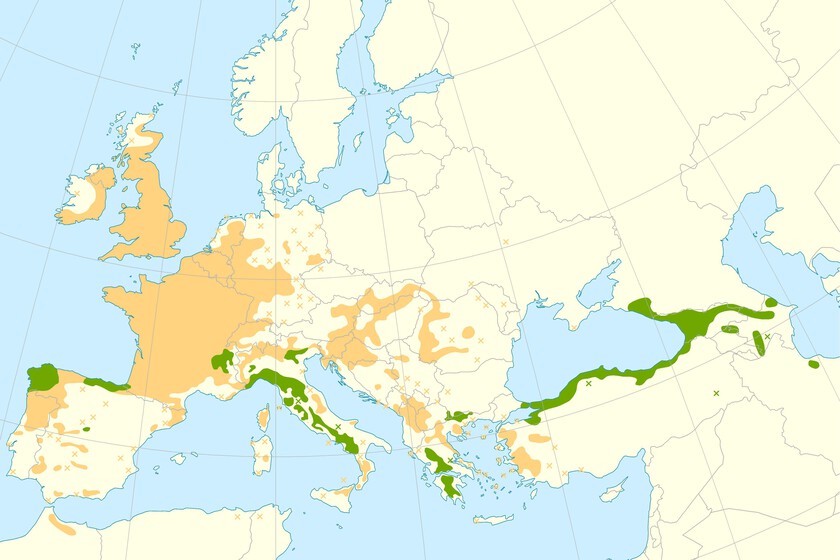
This map uses national forest inventories, field observations, and expert criteria to differentiate between original habitats and areas where humans have planted the trees since the Neolithic period. The map corrects the historical assumption that Romans were responsible for the primary spread of the species.
Instead, the data shows that the tree survived the last glaciation in southern refuges and likely recolonized the continent from Turkey. The native areas include regions in the western Pyrenees, the Alps, the Italian Apennines, the southern Balkans, and a long strip along the southern Black Sea from Anatolia to the Caucasus. Human activity significantly expanded the tree's reach during the Middle Ages, as people planted it as an alternative to grain in mountainous regions.
The map identifies large areas of France, the United Kingdom, the Rhine Valley, and Central Europe as regions where the tree was introduced and naturalized. These findings help authorities protect genetic diversity against threats like the chancro fungus and crossbreeding with Asian species. Climate change presents a complex future for the species. While the tree may expand its borders in some areas, models for the Iberian Peninsula suggest a reduction in suitable habitats, particularly in the Mediterranean strip.
Selected and summarized by local AI How we work