Genetic studies challenge traditional views of prehistoric gender roles
Summary and headline written by AI from the source article. How we work
Archaeologists once commonly believed prehistoric men hunted while women stayed home with children, but recent genetic research is revealing a more complex picture of early human societies.
For decades, interpretations of prehistoric life were shaped by a male-centered perspective. However, studies of ancient DNA are now prompting archaeologists to reconsider these assumptions, showing a great diversity in social organization.
Evidence suggests that prehistoric societies did not generally follow a matriarchal structure, but instead exhibited a wide range of practices in how people divided labor, achieved status, moved around, and formed family relationships. Scientists have found proof that women participated in prehistoric hunting and sometimes held high status. In a 9,000-year-old burial site in the Peruvian Andes, researchers identified a young woman buried with big-game hunting tools using protein and bone analysis.
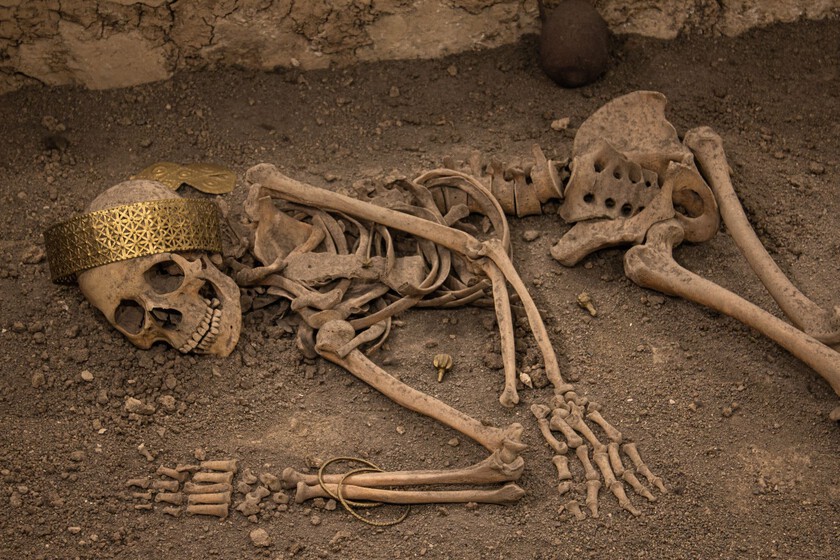
A wider study of 27 individuals buried with hunting tools revealed that 11 were women. Genetic analysis in Europe has also led to revisions of museum exhibits. At Birka, Sweden, a grave previously assumed to contain a man was found through genomic analysis to belong to a woman buried with weapons and military gear. While biological sex doesn’t automatically confirm a military role, the evidence supports that women held positions of authority.
Furthermore, research on Celtic elites in central Europe during the Iron Age showed that power structures weren’t limited to male inheritance, and some women likely belonged to ruling families and maintained authority through dynastic succession. At the Neolithic settlement of Çatalhöyük, researchers analyzed genomes from 131 individuals and found that connections between people were primarily through the maternal line, with daughters remaining in their birth homes between 70% and 100% of the time.