Mantle convection explains missing billion years in Grand Canyon rocks
Headline and summary by local AI
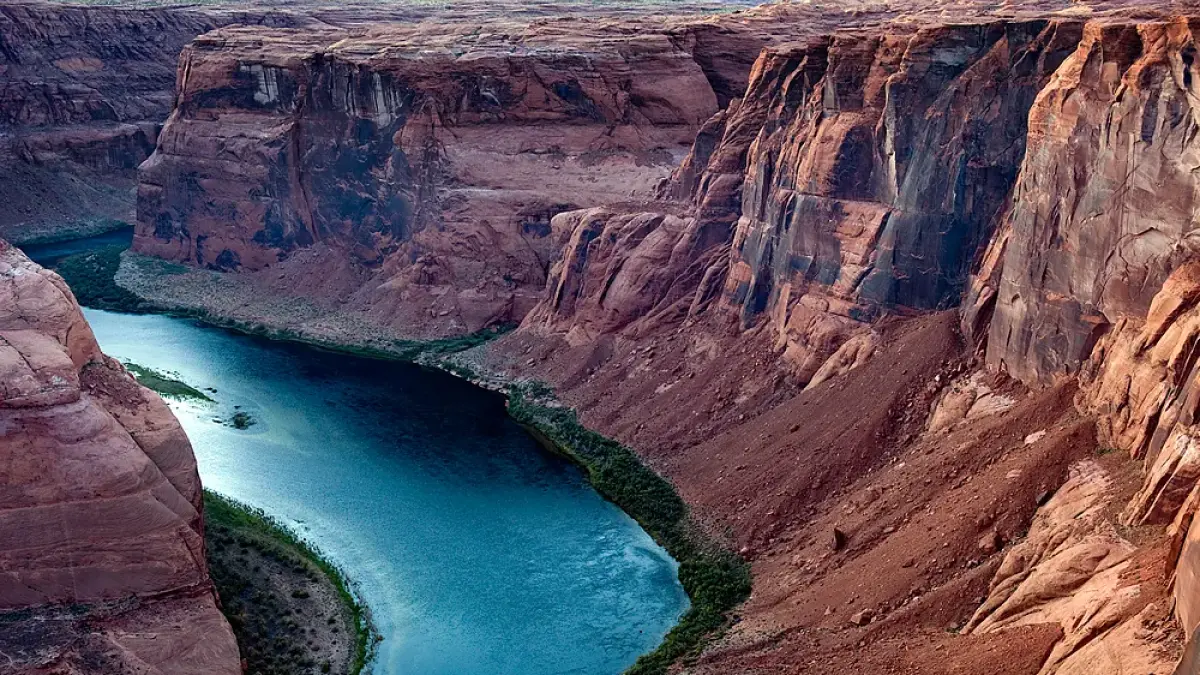
Researchers at the University of Wollongong used a supercomputer to simulate how mantle convection created the Great Unconformity in the Grand Canyon.
The Great Unconformity is a geological gap where younger rock layers sit directly on top of much older crystalline basement rock. This gap represents a missing period of nearly one billion years in the Earth's history.
While the phenomenon has been observed in North America, China, and Europe, scientists have long debated whether these layers were never deposited or were removed by external forces. Santosh Dhungana and Nicolas Flament modeled the movement of the Earth's mantle, a hot rock layer 2,900 km thick. Their simulations suggest that between 1,000 million and 540 million years ago, mantle convection pushed continental blocks upward. These blocks formed the foundations of modern-day North America, Europe, and China.
As the land rose, it exposed the ancient basement rock to the elements. The researchers argue that these exposed surfaces were then eroded by glaciers during a global glaciation that began roughly 700 million years ago. After the land blocks subsided again, new sediments settled on the eroded surface. The study also suggests that this glacial erosion changed seawater chemistry, potentially triggering the Cambrian explosion, a period of rapid biological evolution 540 million years ago.
Selected and summarized by local AI How we work