British mathematician challenges ancient optical illusion claims about Athens’ Parthenon
Summary and headline written by AI from the source article. How we work
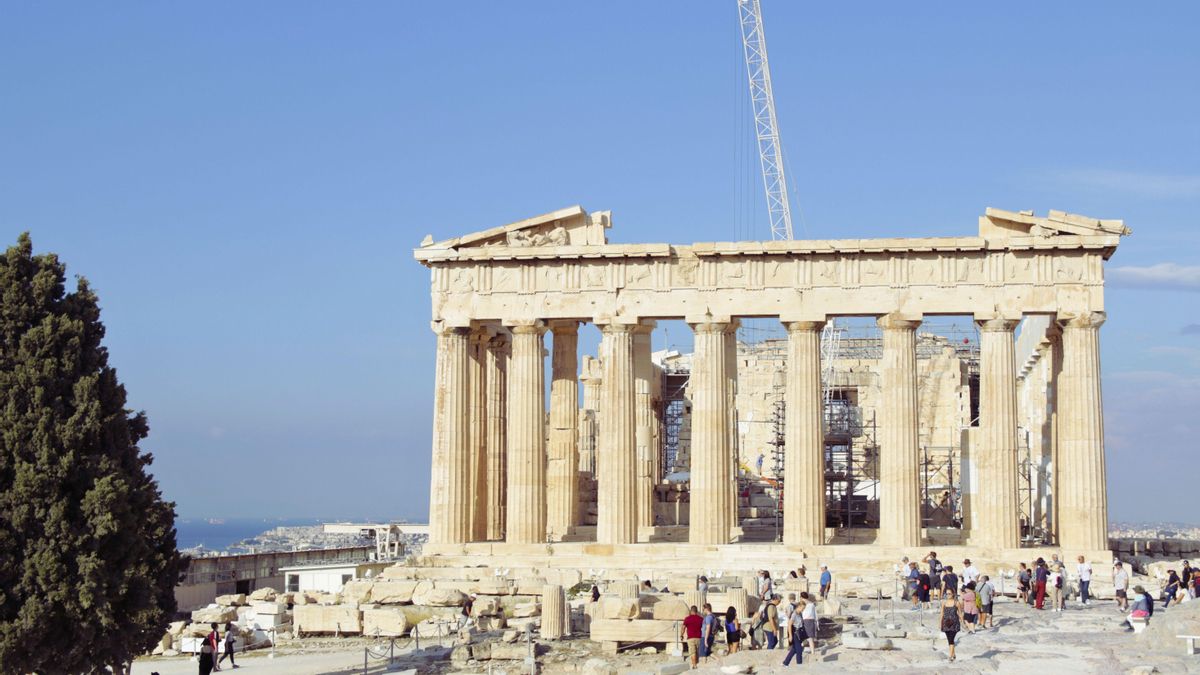
Alain Goriely, a professor at the University of Oxford in the United Kingdom, questioned the long-held belief that the Parthenon in Athens, Greece, was deliberately built with curves to counteract optical illusions.
For centuries, people have thought the ancient Greek architects intentionally included subtle distortions to make the temple appear perfectly uniform to the eye. This idea originated with the Roman architect Vitruvius, who wrote about architectural adjustments to compensate for how people perceive straight lines.
In the 19th century, architects measured slight curves in the Parthenon’s base and columns, seemingly confirming the theory that builders had corrected for these visual effects. Goriely reviewed these supposed “optical corrections” and subjected them to mathematical analysis. He found little evidence to support the idea that these curves actually counteract illusions under normal viewing conditions. Specifically, Goriely examined claims that the Parthenon’s base arches upwards to prevent the illusion of sinking, and that columns bulge to appear straight.
His research indicates that these features do not reliably create the intended visual effect. Goriely suggests people often seek out mysteries and idealised harmony in ancient structures, leading to misinterpretations, and advocates for using mathematics and science to move beyond these assumptions.


