Ancient clay figures reveal children participated in art 15,000 years ago
Headline and summary by local AI
Researchers identified fingerprints on ancient clay figurines in Israel that prove children helped create symbolic objects during the Natufian culture.
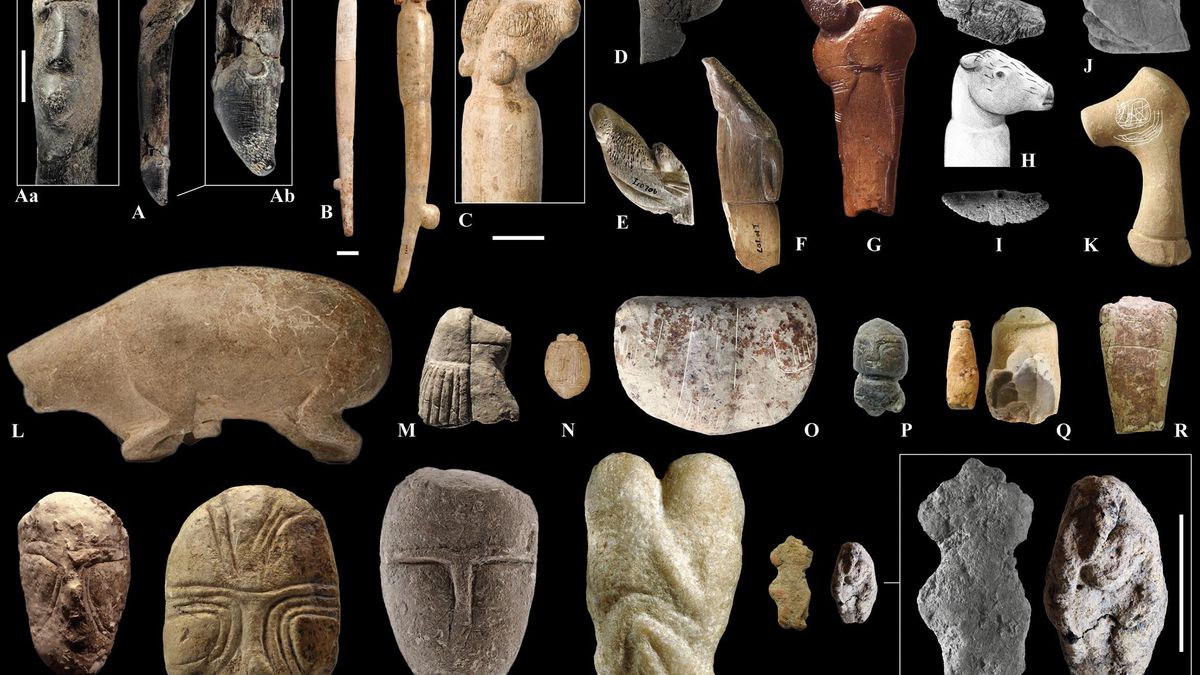
Laurent Davin and his team analyzed 154 clay pieces found at three archaeological sites: Eynan-Mallaha, Hayonim Terrace, and el-Wad Terrace. These artifacts date between 15,000 and 11,650 years ago, a period when communities in Southwest Asia lived by hunting, fishing, and gathering before the widespread adoption of agriculture.
The collection includes 15 figurines of people and animals and 139 cylindrical pieces. The team found specific fingerprints on a human figure at Eynan-Mallaha. One print belongs to a young adult, while a second print sits on top of it, belonging to a prepubescent child. The researchers believe the adult handed the figure to the child during its construction, suggesting a direct transfer of knowledge between generations.
Other pieces, such as a small bird and a cylinder, also show that children participated in different stages of manufacturing, including modeling and smoothing colored clay. The study shows that Natufian communities had a consolidated tradition of clay art earlier than previously thought. While these items were once considered rare before the Neolithic period, the analysis reveals that people used clay to create decorative figures and consistent artistic styles before they began farming.
The researchers noted that different sites showed different age groups participating in the work, which might reflect how different communities organized their production of these objects.
Selected and summarized by local AI How we work