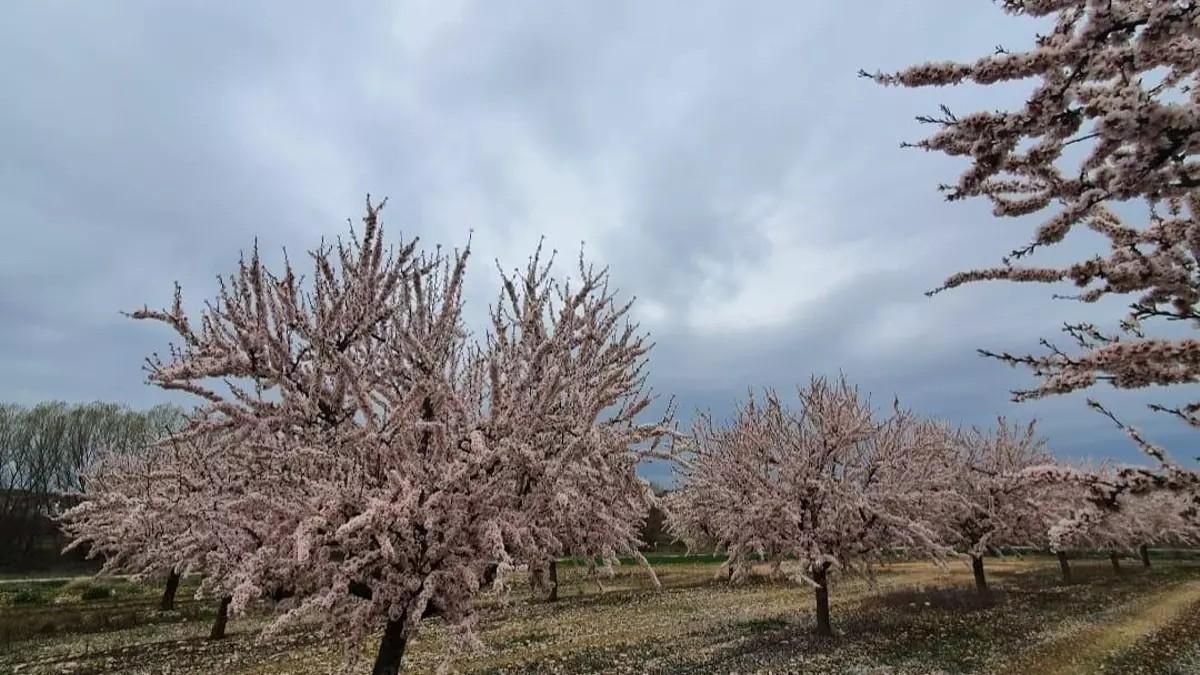
Almond farming expansion changes aragoan agricultural landscape
Headline and summary by local AI
Farmers in Aragón, a region in Spain, are rapidly expanding almond cultivation and shifting toward intensive irrigated production models.
The region now manages 92,167 hectares of almond trees. Approximately one third of these hectares use irrigation, which is notably higher than the 24.2% national average in Spain. In the province of Huesca, this proportion reaches 41% as new mechanized plantations replace traditional dry-land farming. This growth has shifted the regional agricultural hierarchy.
Almonds have overtaken peaches as the primary woody crop for irrigated land in the area. Data from the Ministry of Agriculture shows that irrigated almond trees occupy 30,129 hectares, surpassing the 21,309 hectares used for peaches. This expansion is driven by high productivity, as irrigated plots yield 1,672 kilos of almonds per hectare, which is 3.7 times more than the 457 kilos produced on dry-land plots. The shift is also fueled by a need for mechanization to address labor shortages.
The Centro de Investigación y Tecnología Agroalimentaria (CITA) has developed specific varieties like Guara, Soleta, and Belona to suit these conditions. However, the rise of intensive farming has attracted national and foreign investment funds. The agricultural organization UAGA reports that these investors are driving up land prices, with some lease prices tripling and purchase prices doubling in parts of Zaragoza. These high costs may make it harder for family farms to compete or continue operations.
Selected and summarized by local AI How we work
Recovery: Ecosystems recovering, species returning, nature thriving or newly found, and protection already in force.