Red crabs migrate to the coast in an Australian island territory
Headline and summary by local AI
More than 100 million red crabs have begun their annual migration from the forests to the coast of Christmas Island, a remote Australian territory in the Indian Ocean.
The movement coincides with the first rains of the wet season and follows lunar cycles to ensure the reproduction of the species. Parks Australia, the agency responsible for the country's national parks, manages the conservation of these crustaceans.
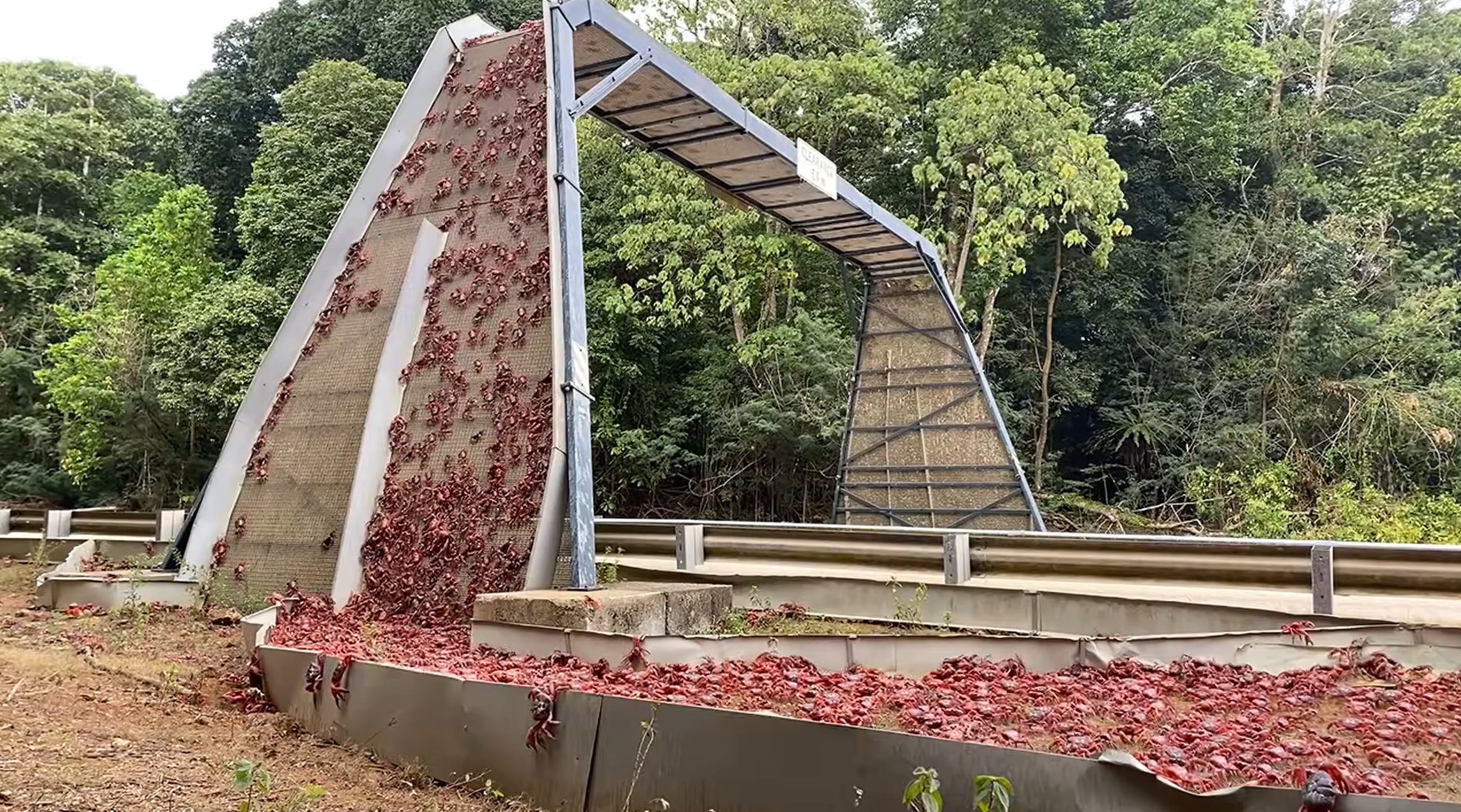
The crabs travel across forest floors, roads, and bridges to reach the shoreline, where females release their eggs into the ocean during high tides and the last quarter of the moon. To protect the animals, park officials spend months preparing temporary barriers, elevated paths, and underground tunnels. The roughly 1,900 residents of Christmas Island adjust their travel plans for several weeks to avoid hitting the crabs.
Authorities also close some roads and provide regular updates to the community regarding the movement of the animals. This year, officials also launched live broadcasts so people around the world can watch the migration. Conservation efforts have helped the population grow from 50 million in the early 2000s to over 100 million today. These programs focused on controlling yellow crazy ants, an invasive species that previously displaced millions of crabs from their burrows.
The red crabs serve as a key species by consuming plant matter and renewing the soil, which supports the biodiversity of the tropical forest.
Selected and summarized by local AI How we work


