Archaeologist Josu Narbarte publishes research on basque society in early Middle Ages
Headline and summary by local AI
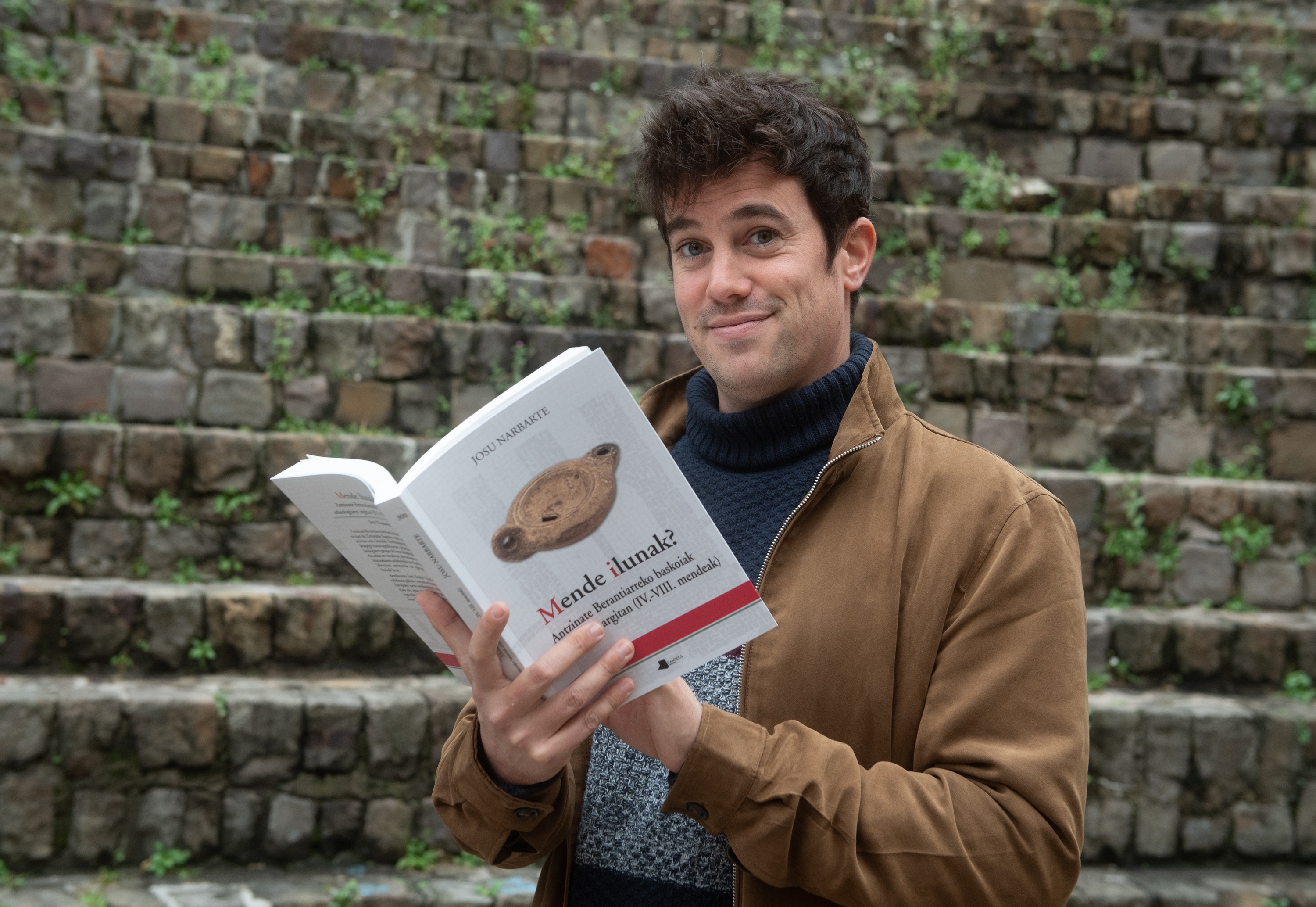
Archaeologist Josu Narbarte released a new book through Pamiela publishing house to examine Basque society during the early Middle Ages.
Narbarte explains that this period began with the fall of the Roman Empire and lasted until the early Middle Ages. While many people in the Basque Country view this era as a dark period, Narbarte argues it was a time of significant change.
The collapse of the Roman state model forced people to reorganize their lives, creating new settlements, establishing different power structures, and developing new trade routes and communication methods across Western Europe. The book synthesizes existing data and research to provide a collective view of the era. Narbarte notes that while individual pieces of data may lack meaning alone, they form a complete picture when combined.
He emphasizes that archaeology allows researchers to view historical realities from different perspectives than traditional written sources. The work highlights the importance of collective knowledge built from the studies of many researchers. The book organizes its findings into four sections focusing on the general context of the Basque territory, urban centers, the aristocracy, and the working population. Narbarte analyzes specific cities such as Iruñea, Oloroe, Iruña-Veleia, and Baiona.
He also distinguishes between two types of aristocracy: land owners and new rulers. Finally, the author focuses on the working population, a group often overlooked in historical narratives dominated by kings and bishops.
Selected and summarized by local AI How we work
Discovery: Archaeology, new knowledge of art, culture and history, forgotten history uncovered, something lost restored.
More in Discovery

Photographer Andres Oyuela uses Colombian identity to shape fashion imagery
colombiaone.com · 17 Nov 2026
Art Gallery of Ontario showcases historic frames without paintings
smithsonianmag.com · 17 Nov 2026
Lagrelius collection becomes first Scandinavian geological World Heritage site
svt.se · 18 Nov 2026