Vietnam’s Hai Ly church declared first climate change heritage site
Summary and headline written by AI from the source article. How we work
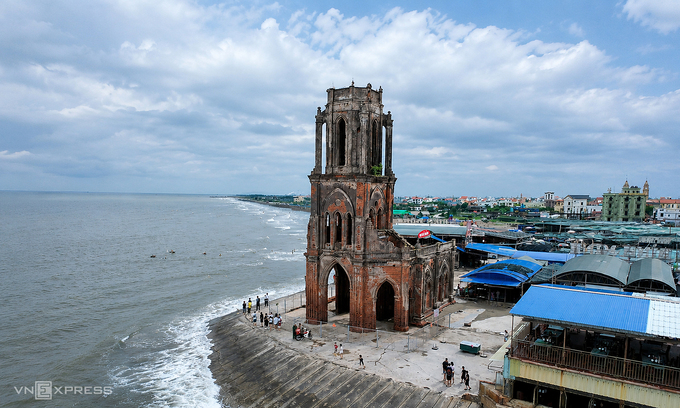
In Hai Tien Commune, Vietnam, the 100-year-old Church of the Sacred Heart, known locally as Hai Ly church, has been designated the country’s first heritage site documenting the impacts of climate change.
The church stands as a testament to the long history of human interaction with the coast of Xuong Dien, a former fishing village.
Over the past century, the sea has eroded nearly one kilometer of coastline near the church, and dikes have repeatedly been breached and rebuilt to protect the land. The church’s current location outside the sea dike offers visible proof of these shoreline changes and the efforts people have made to reclaim and defend coastal land.
Vu Cao Minh, a scientist with the Vietnam Academy of Science and Technology, explained that the church is valuable not just as a relic, but also for its relationship to the shoreline, dikes, and the broader history of settlement in the area. Like similar sites internationally, such as the preserved ruins of St Mary’s Church in Kent, U.K., authorities in Hai Tien Commune now plan to develop and manage Hai Ly church as a tourism destination.
This recognition will help preserve the church, its surrounding landscape, and the records that document the changing coastline, offering scientific, educational, and tourism benefits to the region.


