Giant rat fossils in Thailand suggest earlier evolution of large rodents
Headline and summary by local AI
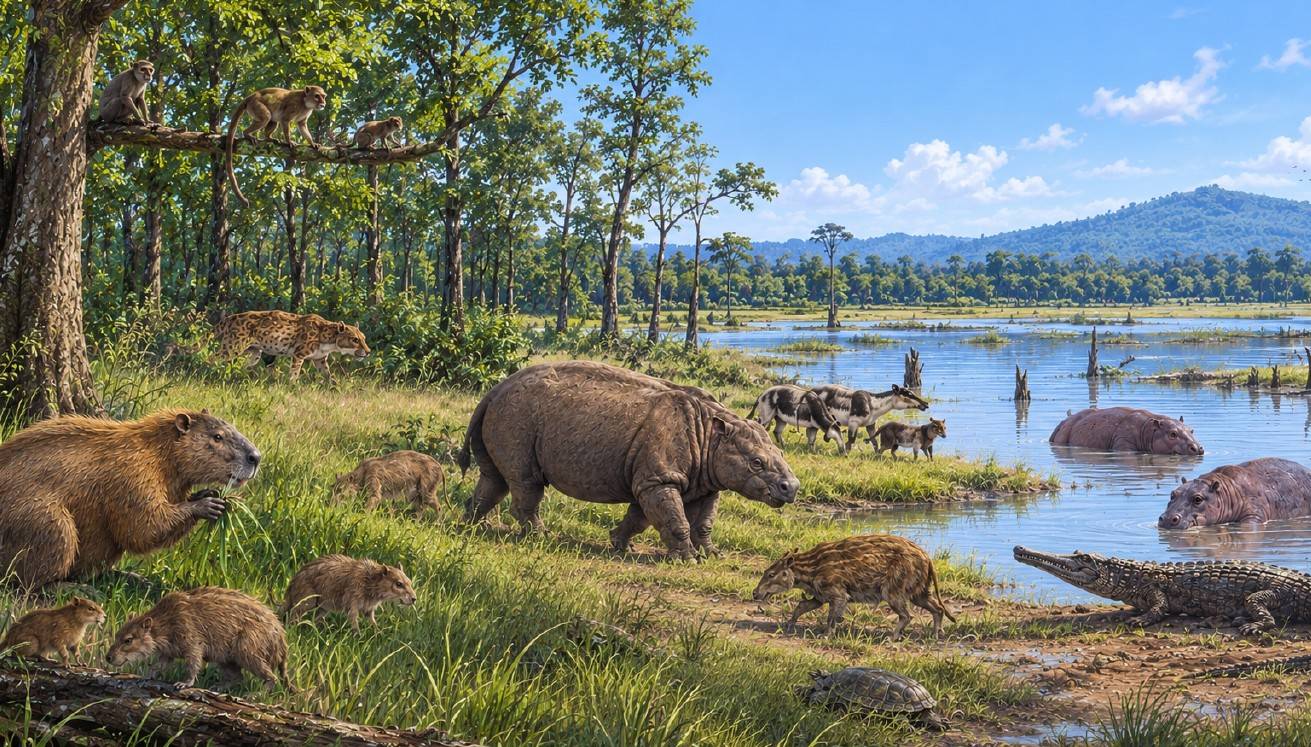
Researchers found fossilized teeth in Krabi, Thailand, belonging to a giant rodent that lived 33 to 35 million years ago.
The Department of Mineral Resources in Thailand and scientists from France and Canada identified the specimen as Yakamys sirindhornae. The discovery suggests that rodents evolved into large-bodied animals at least 15 to 20 million years earlier than scientists previously thought. The animal lived during the Late Eocene epoch, a period within the Palaeogene era.
While the creature weighed an estimated 30 kilogrammes, it belonged to the same broad group as modern squirrels and capybaras. Natural Resources and Environment Minister Suchart Chomklin announced the finding, noting that the species is the largest rodent discovered from the Palaeogene period. The ministry plans to continue supporting fossil research and public education to preserve the geological heritage of the region.
Selected and summarized by local AI How we work
Discovery: Archaeology, new knowledge of art, culture and history, forgotten history uncovered, something lost restored.
More in Discovery

Bertrand Belin releases a collection of interviews about his creative process
letemps.ch · 12 Nov 2026

Fox breeding experiments reveal brain changes linked to domestication
zmescience.com · 5 Nov 2026
Researchers identify dinosaur blood cell remnants in 115 million year old fossil
origo.hu · 3 Nov 2026