Massachusetts tires became a thriving reef
Summary and headline written by AI from the source article. How we work
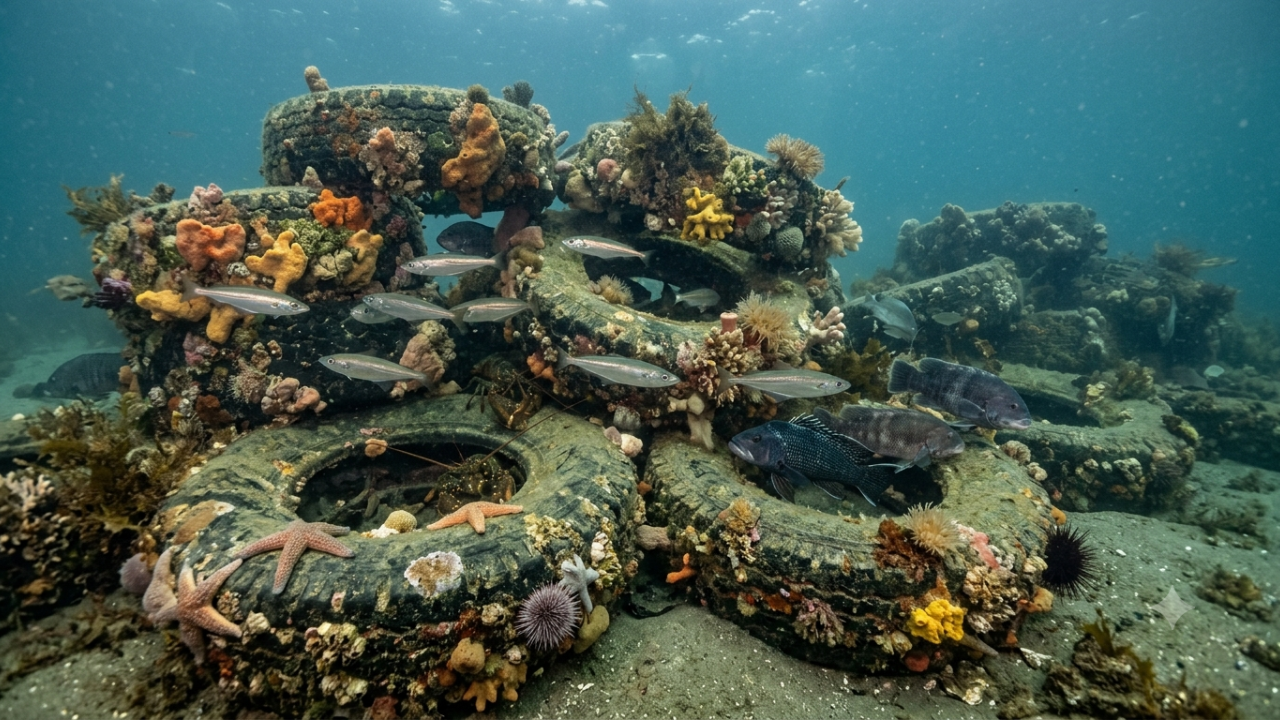
In 1978, the town of Yarmouth, Massachusetts, and the Division of Marine Fisheries began building an artificial reef in Nantucket Sound using concrete-filled tires.
They fastened three to five tires together and sank them to create complex structures on a sandy seabed, intending to provide shelter and habitat for fish and lobsters. The reef initially consisted of around 1,500 units, with another 1,000 added in 1994, expanding to cover 127 acres.
Researchers from the Division of Marine Fisheries monitored the reef in 2009 and 2010 and found the structures remained stable and within their permitted area, with higher fish populations concentrated where more reef material existed. A 2019 study compared the Yarmouth reef to a natural reef, another artificial reef, and bare seabed, revealing that finfish located reef habitats on average after 33 seconds, compared to 502 seconds on the bare seabed.
The town continued to expand the reef in 2014 and again around 2019, adding concrete and granite materials from other sources. These additions aimed to increase structural complexity and enhance habitat for a variety of marine life, including black sea bass, scup, and lobsters. Massachusetts now actively manages these artificial reefs to track their performance and support fisheries.