Idaho officials used parachutes to relocate beavers to remote wilderness
Headline and summary by local AI
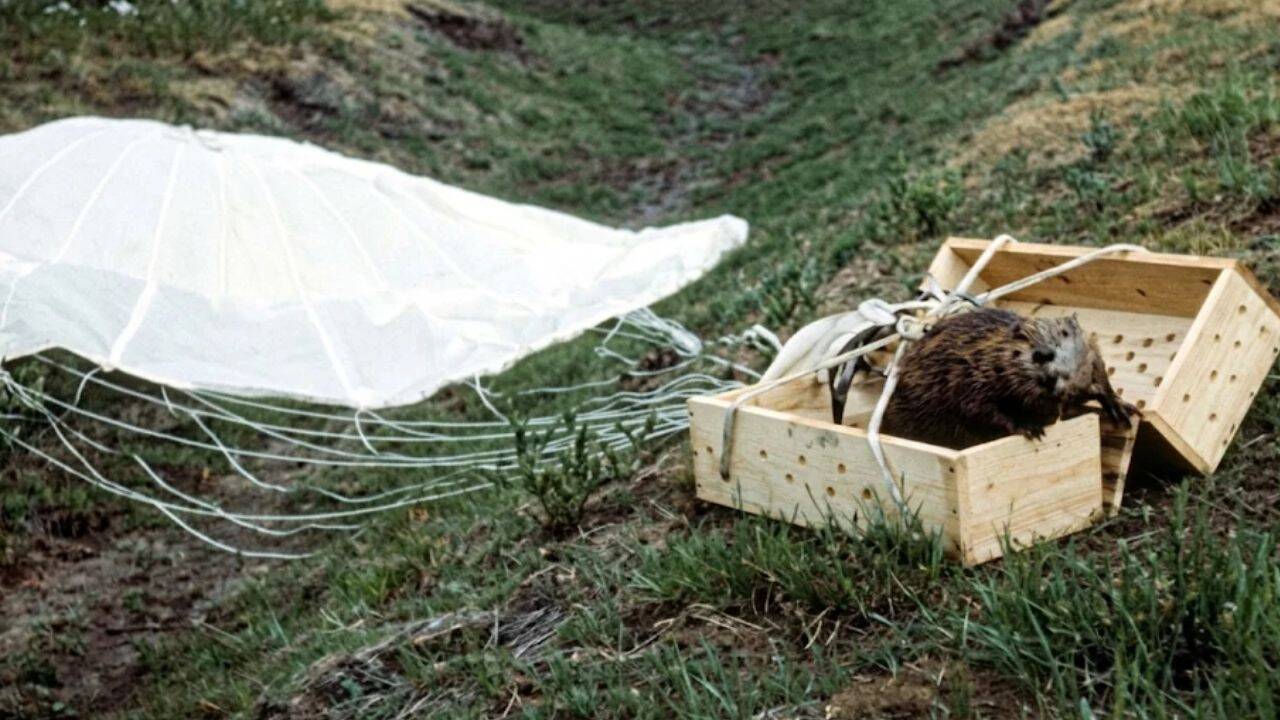
The Idaho Fish and Game Department relocated 76 beavers into remote wilderness areas using airplanes and parachutes in 1948.
The agency chose this method to overcome the difficulties of transporting the animals through mountainous terrain and dense forests where roads were scarce. Previous efforts required moving the animals on pack horses, mules, and trucks, which often exposed the beavers to extreme heat and rough handling.
The department used 24 foot rayon parachutes from surplus wartime stock to carry boxes containing two beavers each. These boxes featured ventilation holes and a spring hinge mechanism that allowed the animals to exit once the parachute landed. Before the main operation, officials tested the system with dummy weights and an old male beaver named Geronimo to ensure the boxes remained secure during flight.
The relocation helped the department manage beaver populations in areas where they threatened irrigation systems and orchards. By moving the animals to new sites, officials aimed to establish fur-bearing colonies that would improve habitats for fish, waterfowl, and game. By late 1949, observers confirmed that the relocated beavers had successfully built dams, constructed houses, and stored food.
Selected and summarized by local AI How we work
Recovery: Ecosystems recovering, species returning, nature thriving or newly found, and protection already in force.
More in Recovery

Ethiopian community members plant trees to restore water watersheds
happyeconews.com · 19 Nov 2026

Cheetah population grows in India as Botswana female gives birth in the wild
conexaoplaneta.com.br · 24 Nov 2026

Leatherback turtles begin nesting season on Mexican coastlines
jornada.com.mx · 16 Nov 2026