North Carolina peatland shifts from carbon sink to source
Summary and headline written by AI from the source article. How we work
An abandoned farming project in North Carolina dramatically altered a 23-square-mile peatland, turning a long-term carbon store into a source of greenhouse gas emissions.
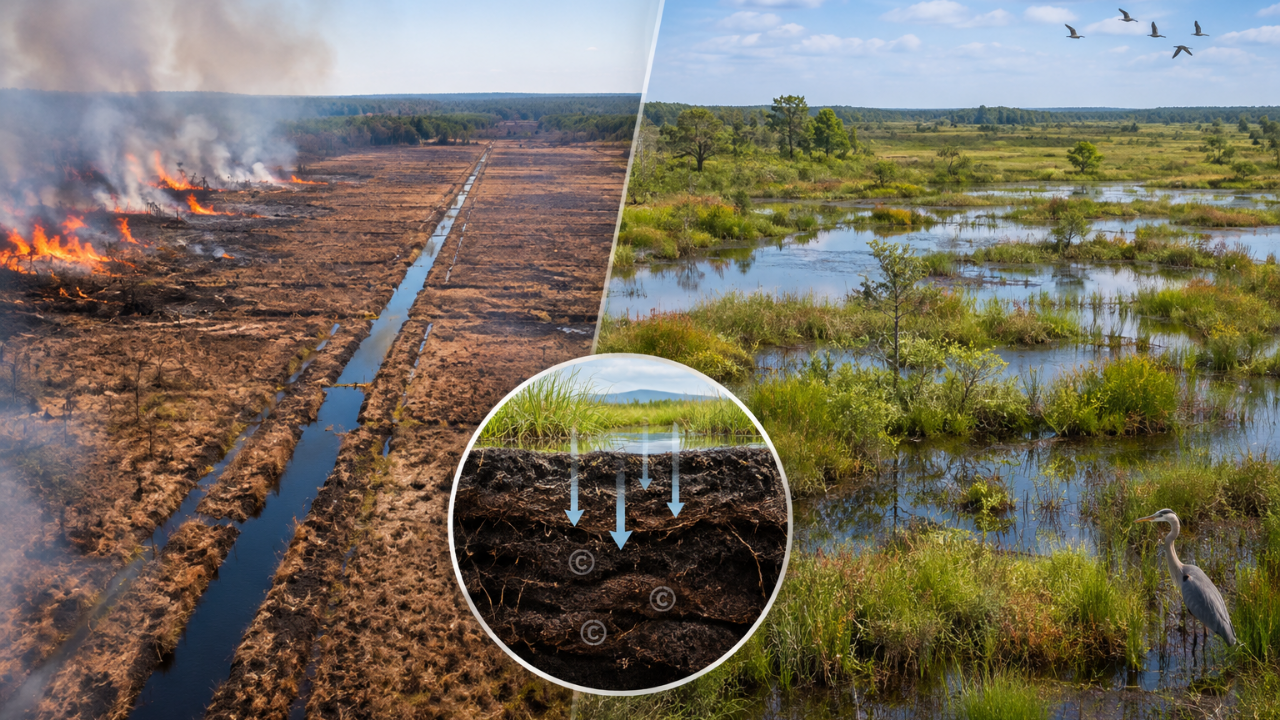
Decades ago, developers cut approximately 50 miles of drainage ditches through the peatland near Belhaven, lowering the water table and exposing the organic soil to air. This change caused the peat to decompose more rapidly, releasing an estimated 130,000 tons of carbon dioxide annually and increasing the risk of wildfires.
Scientists now recognize the damage and are working to reverse it. Colorado-based Pantheon Regeneration intends to block the ditches, raising the water table and replanting native vegetation. This project builds on earlier restoration efforts in nearby areas like Pocosin Lakes National Wildlife Refuge, which experienced extensive fires in 2008 and 2022. The restoration aims to slow decomposition, reduce carbon emissions, and protect the ecosystem’s biodiversity.
Peatlands, though covering only 3% of Earth’s land, store about one-third of the planet’s carbon, making their preservation crucial. Pantheon Regeneration also plans to use verified carbon reductions from the restored peatland to generate carbon credits for companies seeking to offset their emissions.