Australia’s concrete reefs boost fish species
Summary and headline written by AI from the source article. How we work
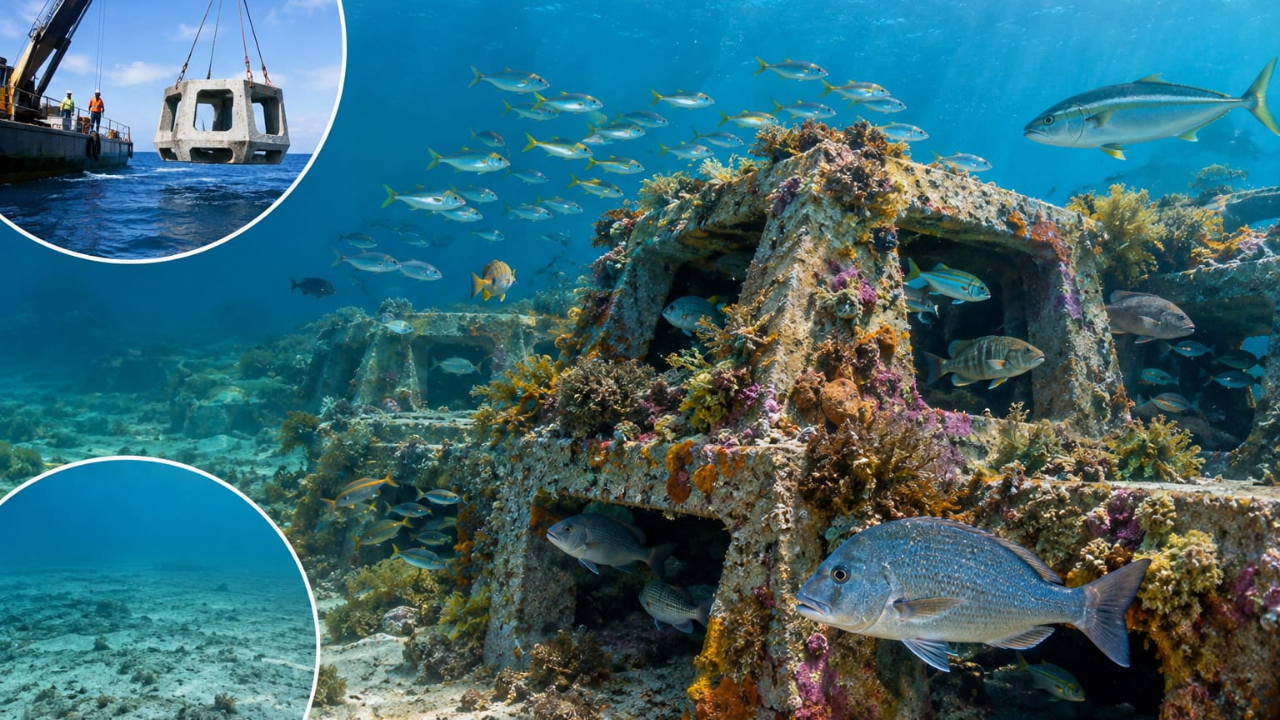
In 2013, Recfishwest, a recreational fishing group in Western Australia, worked with the government to sink 60 ten-tonne concrete modules off the coasts of Bunbury and Dunsborough.
These modules, designed to mimic natural reefs, aimed to create shelter and attract marine life to previously barren seafloor. Before the installation, researchers identified about a dozen fish species at these locations. Three years later, the same sites hosted more than 60 fish species, demonstrating a significant increase in biodiversity.
The concrete structures quickly became covered in algae and invertebrates, creating a complex food web and attracting both small and large fish. Researchers observed pelagic species like Samson fish and skippy around the structures within two months, and demersal species such as dhufish within six months. Western Australia expanded the initial reefs in 2019 by adding 90 smaller modules to the Bunbury reef, increasing its fishable area by 50 percent.
This success led to the creation of nine artificial reefs along the Western Australian coast since 2013, totaling over 1,000 modules and nearly 3,000 tonnes of new habitat. The project also benefits local communities by supporting recreational fishing and related tourism.