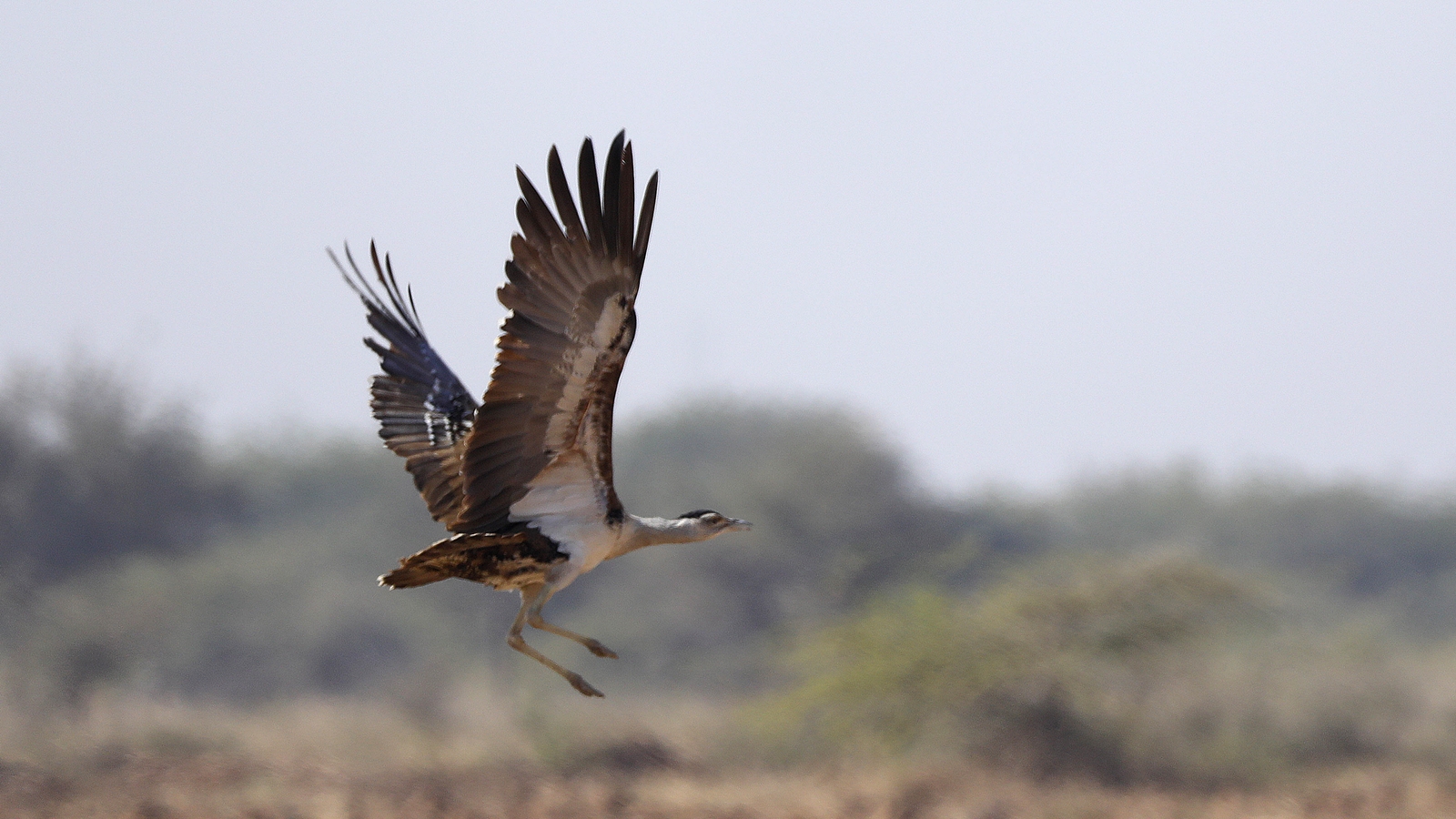
Indian conservationists release captive-bred Great Indian Bustards into Rajasthan Desert
Headline and summary by local AI
The Wildlife Institute of India and the governments of Rajasthan and Gujarat released four captive-bred male Great Indian Bustards into the Desert National Park in Rajasthan in early October.
This initiative, part of Project Great Indian Bustard, marks the first rewilding exercise for the species under the program. Scientists used GPS-GSM transmitters to monitor the birds as they adjusted to their new environment. The birds exhibited different behaviors after their release.
Some stayed near the facility for several days, while others began exploring further away and even performed exploratory flights at heights of about 10 metres. Staff observed that the birds initially showed an affinity for the facility but quickly developed a fear of humans when staff members acted as deterrents. This behavior is a positive sign for the conservation efforts, as the goal is for the birds to remain wary of people.
One of the released birds, identified as R3, died 12 days after being set free. A report dated October 21 suggested that foxes killed the bird on October 16. Because the carcass was completely consumed, researchers could not perform a post-mortem. This incident has prompted a discussion about predator management. Scientists are currently working to translocate predators like foxes and desert cats to areas further than 70 km away to reduce predation pressure on the birds and their eggs.
The program plans to release up to 10 birds this year and up to 25 captive-bred chicks during the 2026-2027 period. Conservationists aim for a 30 percent survival rate for the birds until they reach 12 months of age.
Selected and summarized by local AI How we work