Caral civilization adapted to Peru’s landscape 5,000 years ago
Summary and headline written by AI from the source article. How we work
Peru’s Ministry of Culture announced that archaeologists discovered the Caral civilization, considered the oldest in the Americas, thrived by adapting to its environment and establishing trade networks 5,000 years ago.
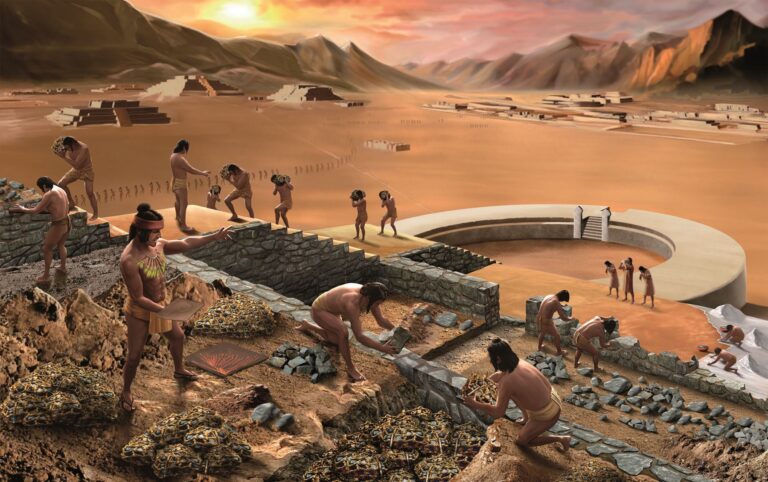
The Caral people, who lived 185 kilometers north of Lima, developed technologies and organizational methods to manage resources from both valleys and the coast.
Archaeologist Ruth Shady presented these findings, based on research at the civilization’s 12 urban centers, during a press conference celebrating 32 years of work at the Caral Archaeological Zone. The society integrated agricultural and marine resources, managed water in line with natural cycles, and built structures using shicras, bags of stone and plant fibers, to lessen the impact of earthquakes. These innovations demonstrate planning to cope with environmental changes.
Evidence also suggests the Caral people constructed large public and residential buildings, tracked celestial cycles for agriculture and ceremonies, and exchanged goods with communities in present-day Ecuador and the Amazon. Researchers found Spondylus shells from Ecuador, macaw feathers, and Amazonian snail shells, revealing extensive trade routes by land, sea, and river. Minister of Culture Alberto Beingolea stressed the importance of learning from Caral’s legacy for the benefit of modern Peruvians.