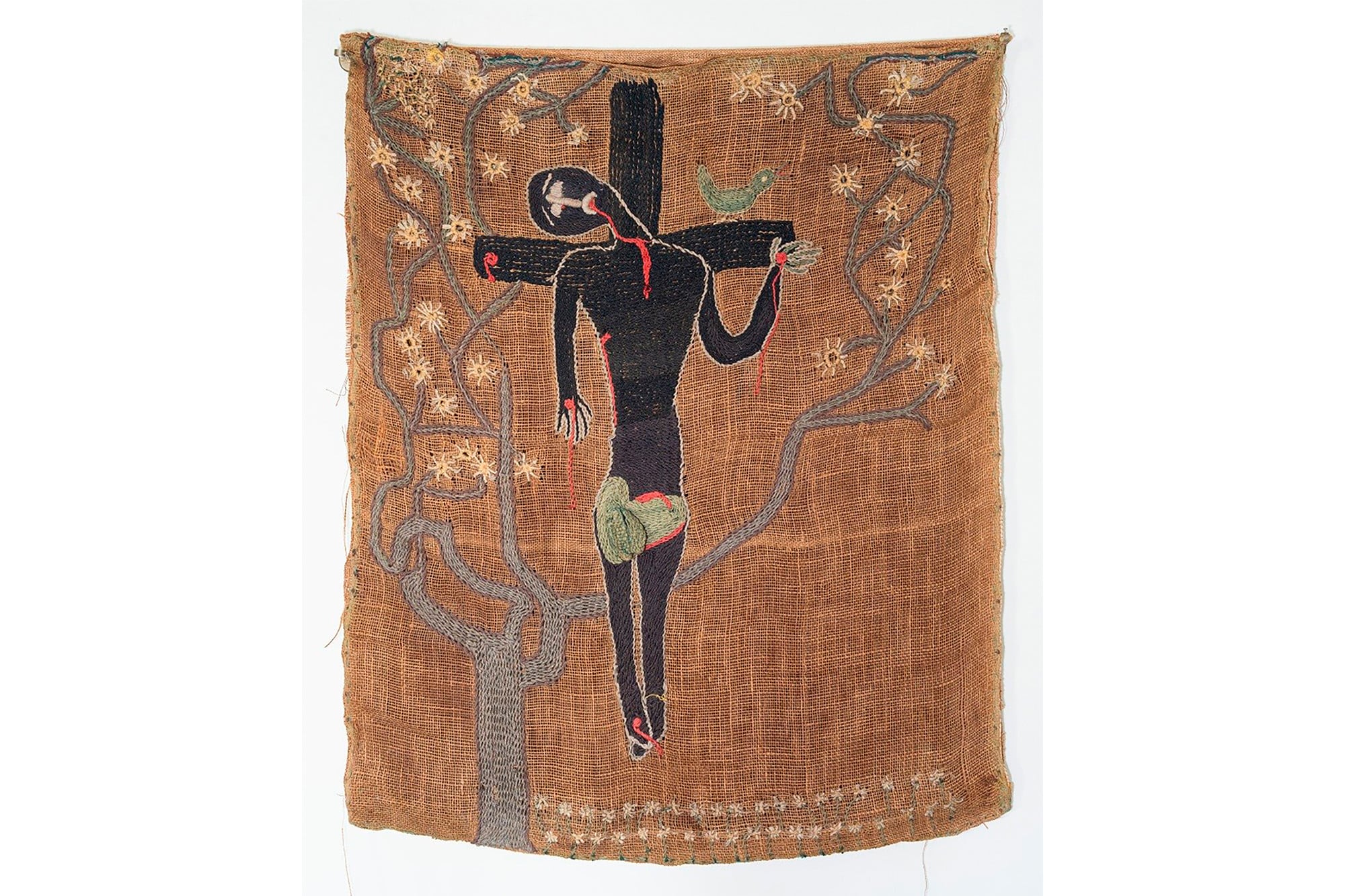
Violeta Parra creates a black Christ tapestry from humble materials
Headline and summary by local AI
Artist Violeta Parra created a unique representation of a black Christ in Chile during the late 1950s.
Parra used burlap and sheep wool to embroider the figure, which she worked on alone after recovering from hepatitis. The artwork depicts a black Christ being liberated by a bird removing a nail, moving away from traditional depictions of suffering to focus on a process of resurrection.
Parra chose the color of the Christ to match the earth of Quinchamalí, a region near Chillán where women produce black pottery. This choice linked the divine figure to the local soil and the traditional craft of the community. The work traveled from a craft fair in Santiago de Chile to a 1964 exhibition at the Museo de Artes Decorativas del Louvre in Paris.
It eventually moved to Buenos Aires, where it remained for 25 years in a private collection before being shared with the public. The piece connects to a broader Latin American tradition of black Christ figures, such as the Cristo Moreno in Peru. These figures emerged from a history of religious syncretism between colonial evangelization and indigenous beliefs. Parra's work reflects this history by using humble materials and local symbolism to create a sacred image that challenges dominant European iconographic traditions.
Selected and summarized by local AI How we work