Rural schools in Argentina gain internet access
Summary and headline written by AI from the source article. How we work
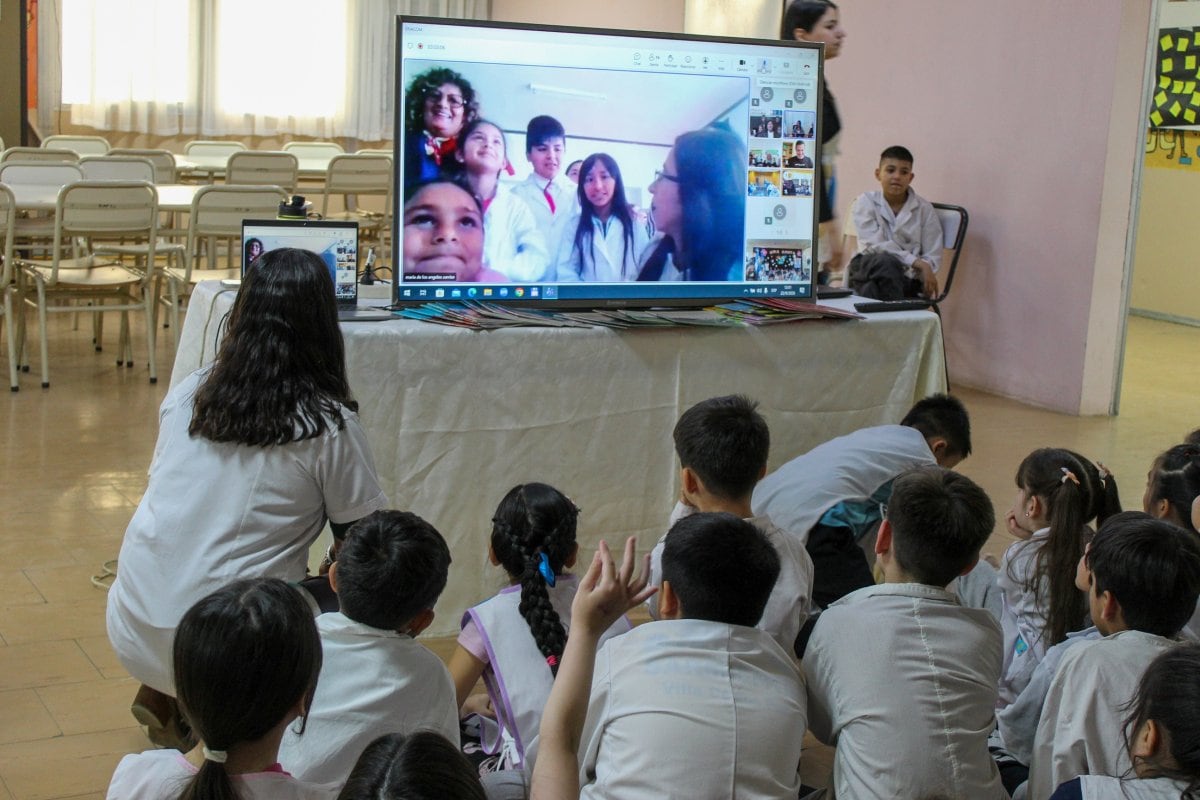
Students and teachers in five Argentinian provinces, Chaco, Entre Ríos, Santa Fe, Tucumán, and Santa Cruz, participated in a recent video conference marking their schools’ first access to high-speed internet.
The Escuela Provincial Primaria N°50 “Monseñor Juan Cagliero” in Rospentek, Santa Cruz, was among the schools connected through a program led by the Ministry of Capital Humano and the Enacom (National Communications Agency).
Norma Mansilla, the school’s director, noted that the new connection will greatly improve learning opportunities for the 67 students, who are primarily children of military personnel and families living on nearby estates. Previously, the school lacked internet access despite having a computer lab. Teachers relied on personal cell phones and shared equipment to complete administrative tasks and had to download educational content in advance.
The program addresses a digital divide affecting schools in isolated areas of Argentina, where traditional fiber optic infrastructure is unavailable. Starlink will provide 6000 satellite internet kits, including equipment and two years of service, representing a US$10 million investment. The Fondo del Servicio Universal, managed by Enacom, will contribute around US$12 million to fund the third year of service, installation, technical support, and network monitoring.
This collaboration between the public and private sectors aims to reduce the digital gap and improve educational resources in historically underserved communities.