Aldabra giant tortoises restore ecosystem processes on Aride island
Headline and summary by local AI
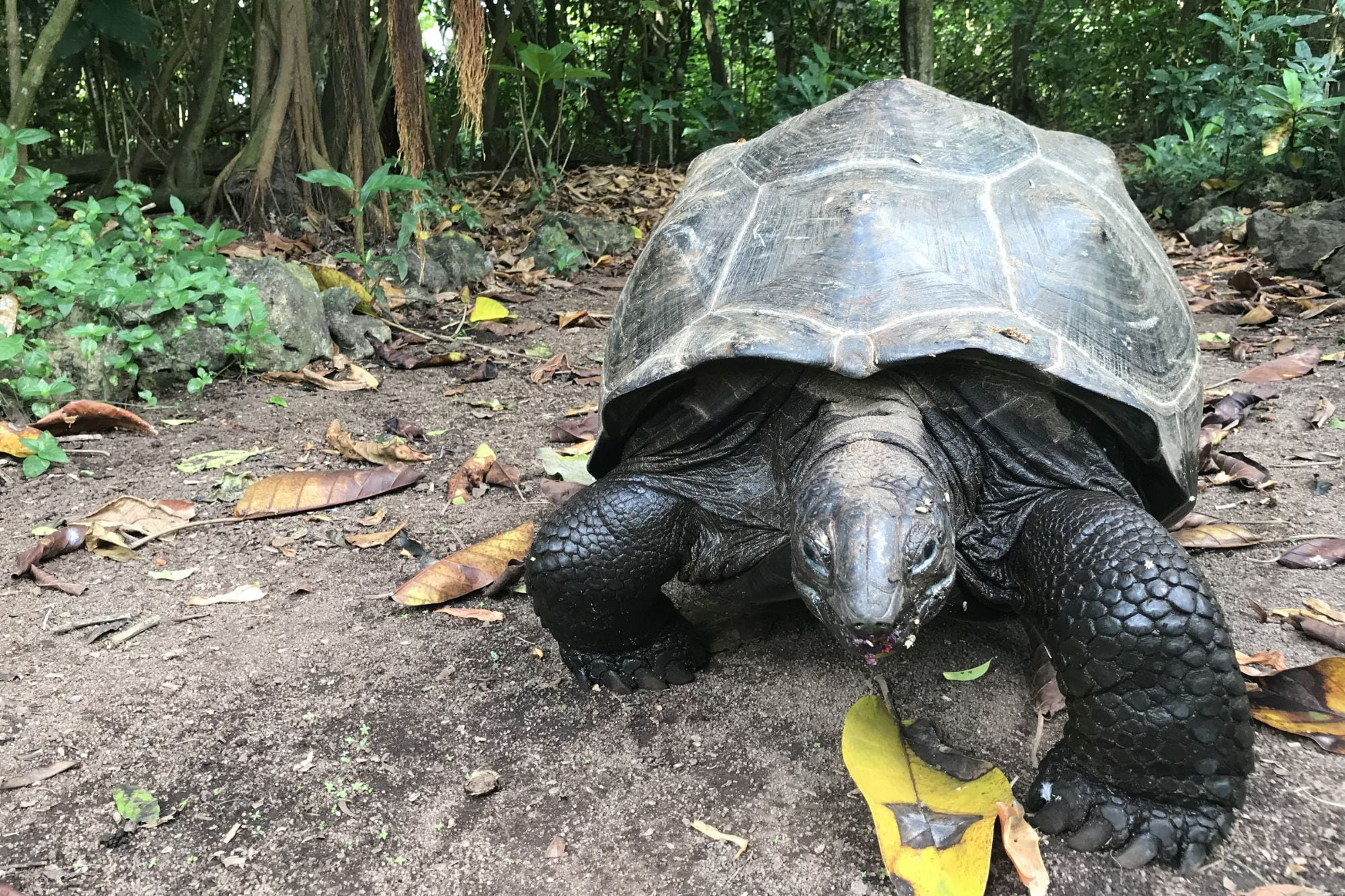
An international team of scientists restored ecological processes on Aride Island in the Seychelles archipelago after reintroducing Aldabra giant tortoises.
The project revived natural functions that had remained inactive for approximately 180 years following the local extinction of the species. Researchers from the Universidad de Exeter and the Consejo Superior de Investigaciones Científicas of Spain monitored the tortoises to see how they functioned as ecosystem engineers. The tortoises quickly began spreading seeds and managing vegetation.
In the first two months, the ten tortoises dispersed more than 11,000 seeds, with 89.5% belonging to native plant species. The animals transported these seeds through their digestive systems and deposited them in feces, allowing plants to germinate away from the parent plant. The tortoises also ate 54 types of invasive plants, which reduced competition for local flora. Sergio García-Peña of the Museo Nacional de Ciencias Naturales noted that this natural method is more efficient than mechanical removal.
The study revealed that individual behavior significantly impacts restoration success. While ten tortoises were released, only three individuals were responsible for more than 80% of the native seed dispersal. One tortoise, labeled T08, performed exceptionally well in spreading seeds and eating invasive plants, while another, T11, showed poor performance in all three evaluated functions.
Iago Ferreiro-Arias of the Estación Biológica de Doñana and the Museo Nacional de Ciencias Naturales stated that these findings suggest future restoration programs should focus on the number of effective individuals rather than just total numbers or genetic viability. The team plans to apply these behavioral insights to other regions, including the Galápagos archipelago in Ecuador, to see if different behavioral roles can improve restoration in other island systems.
Selected and summarized by local AI How we work