Peruvian scientist helps scarlet macaws save their young
Summary and headline written by AI from the source article. How we work
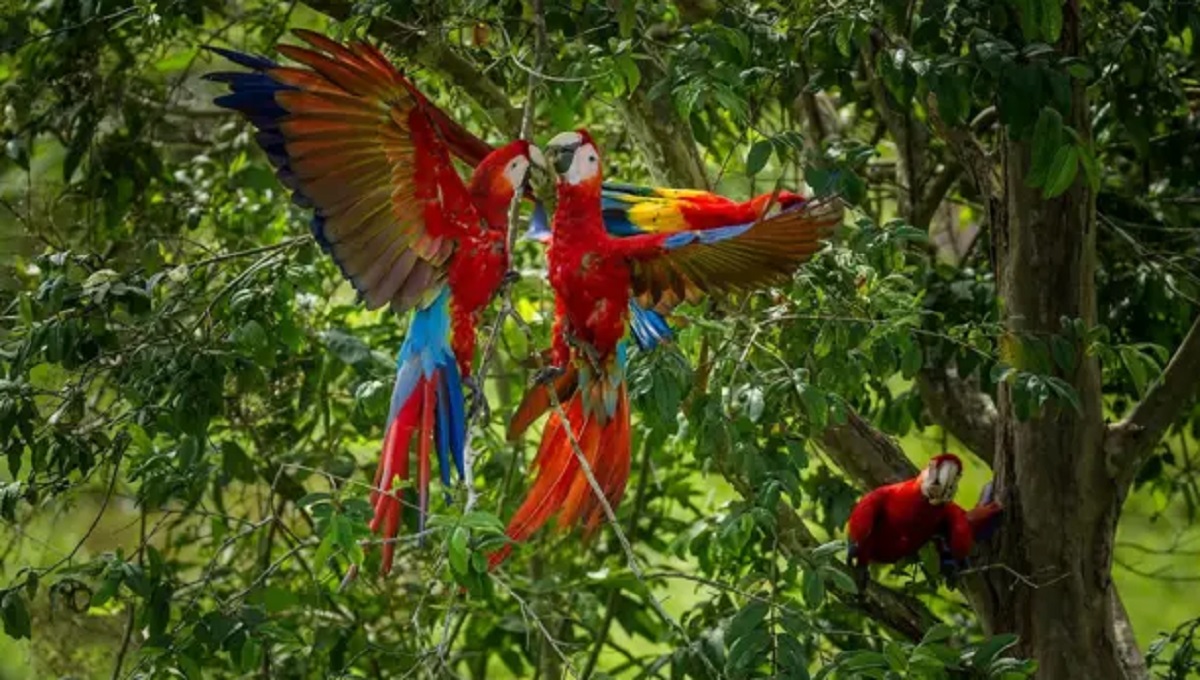
Gabriela Vigo-Trauco, a Peruvian scientist working in the Tambopata National Reserve in the Amazon rainforest, is helping scarlet macaws overcome a deadly breeding practice.
For over two decades, Vigo-Trauco has studied scarlet macaws and discovered that parents intentionally let their youngest chicks die. This behavior, once a survival strategy, now hinders the recovery of the macaw population, which faces threats from poaching and deforestation. To counteract this, Vigo-Trauco began a rescue mission in 2017.
Her team rescues the youngest chicks and finds adoptive parents among wild macaw pairs to raise them. They first hand-feed the chicks for weeks, then carefully place them in suitable nests. This method has shown some success. Of the 25 rescued chicks between 2017 and 2019, four successfully fledged, including a chick named Parker.
While the program is costly and logistically challenging, Vigo-Trauco is adapting the technique, including transferring chicks between nests immediately after hatching to reduce intensive care needs, and sharing her knowledge with conservationists working with other macaw species throughout Central and South America.


