Pataxó people celebrate water rituals in Minas Gerais
Summary and headline written by AI from the source article. How we work
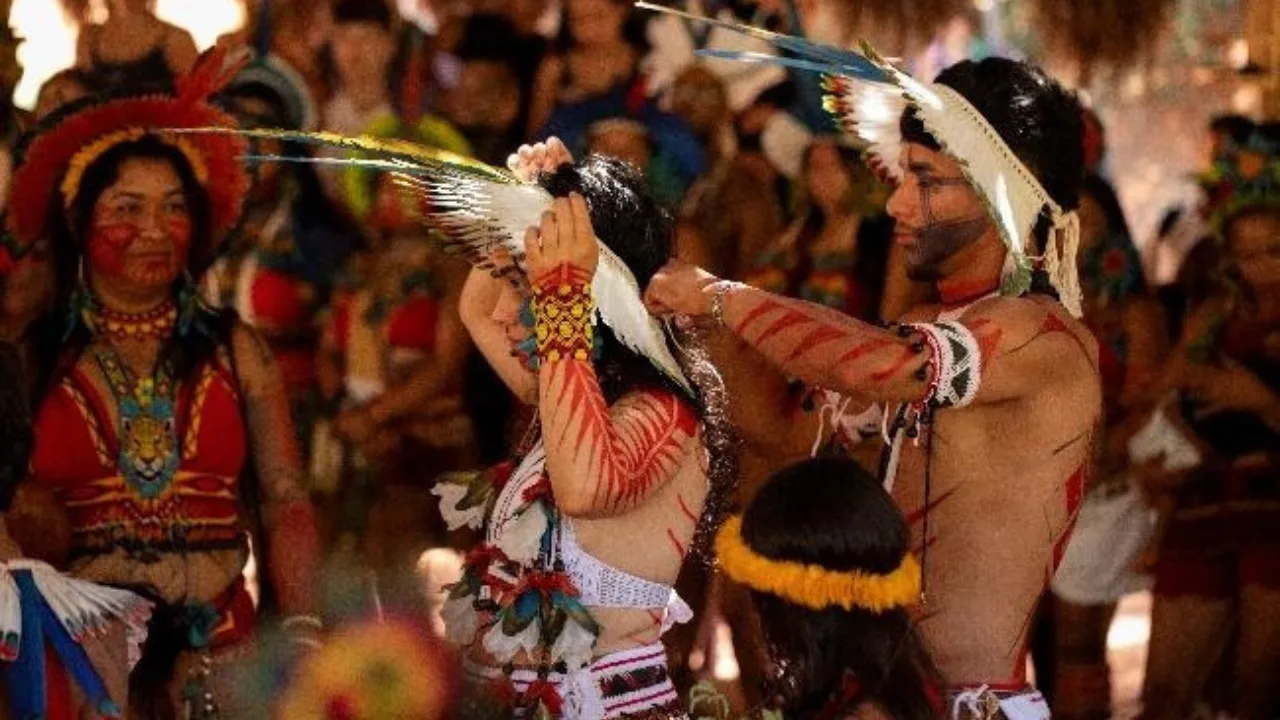
The Pataxó people of Imbiruçu village in Minas Gerais, Brazil, recently held ceremonies to celebrate the rainy season and their cultural traditions.
The Pataxó originally came from Bahia state, but were displaced in 1951 when police violently invaded their territory and a fire destroyed their village between Prado and Porto Seguro. Some migrated to Minas Gerais, and in 1983, Cacique Mongongá founded the Imbiruçu community there, beginning the tradition of the water ritual.
The ritual, prepared over several days in October, includes traditional Pataxó marriages and baptisms. These ceremonies reflect the Pataxó belief that rain created Txopai, the first being and god of wisdom, creation, and nature. During the baptisms, children receive spiritual protection through smoke and water from a sacred lake. Pataxó marriages involve specific tests of strength and commitment.
A groom may carry a stone equal to his bride’s weight to demonstrate his care, and a competition to topple a log tests his bravery. Cacique Txonang, son of Mongongá, continues to lead these rituals, reminding his people of the importance of respecting the natural world and seeking guidance from forest spirits.