Farmers in Paraná use agroforestry to combat rising deforestation
Headline and summary by local AI
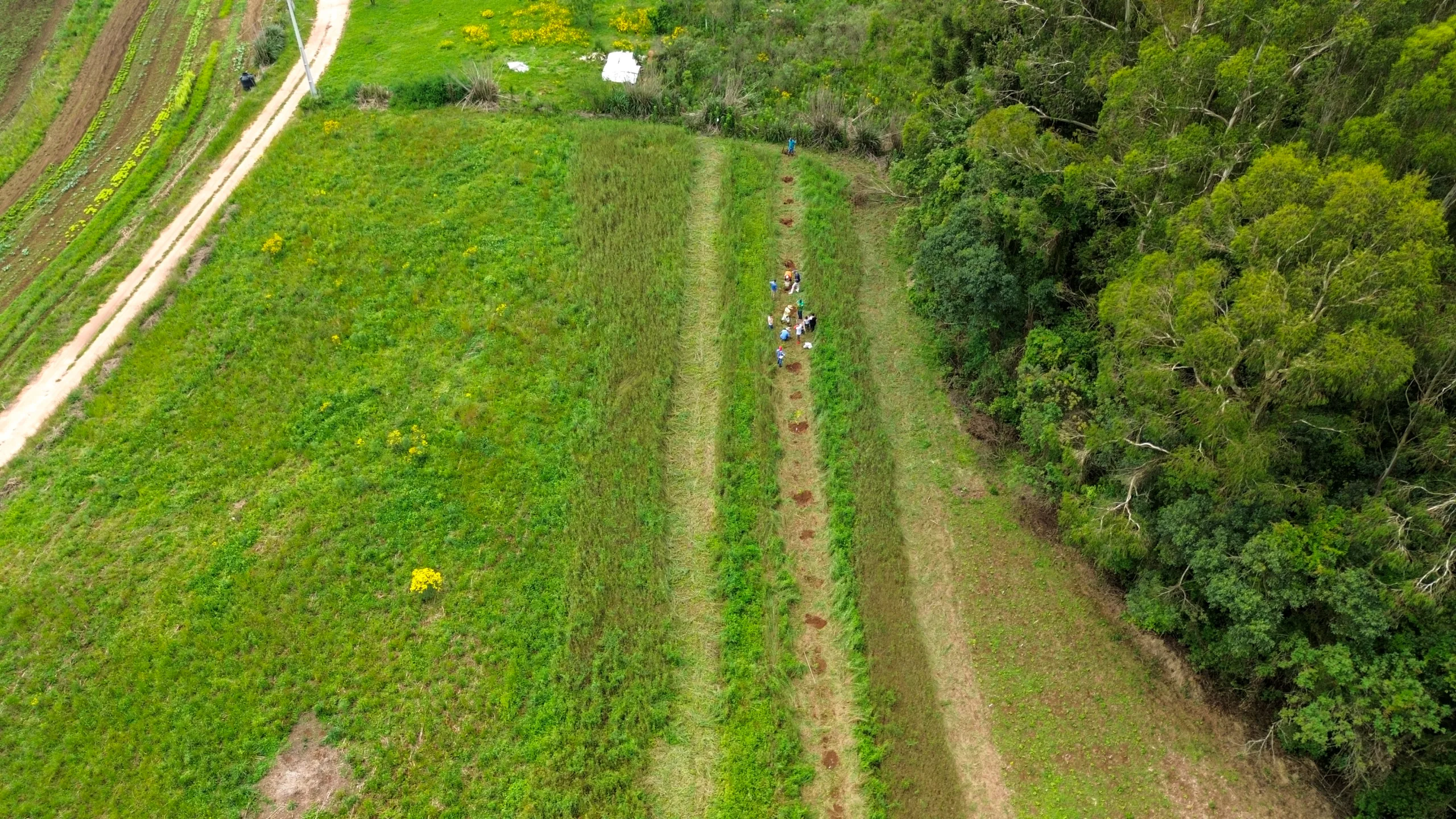
Vera Marcondes and her family established an agroforestry system on their land in the Valmir Motta settlement in Cascavel, Paraná.
After receiving a plot of land without trees in 2012, the family began planting native and fruit-bearing trees alongside agricultural crops like rice, beans, and tubers. This method, known as Sistemas Agroflorestais (SAFs), mimics forest dynamics to improve soil fertility and biodiversity without the need for chemical fertilizers or pesticides.
The Bem Viver project, a partnership between the Instituto Contestado de Agroecologia (ICA) and Itaipu Binacional, supports these practices across the state of Paraná. Since 2024, the project has held 52 workshops to train more than 550 families in agroecology and reforestation. The initiative aims to help 750 families create 150 hectares of agroforestry systems to recover degraded land and generate income.
Priscila Monnerat, the project coordinator, states that these systems offer a way to produce healthy food while fixing carbon and protecting water bodies. The project also reaches communities in the Reforma Agrária and the Terra Indígena Rio das Cobras. Marcondes' family even uses their farm as an educational space for local schools, where children learn about production and science in a community setting.
Selected and summarized by local AI How we work
Recovery: Ecosystems recovering, species returning, nature thriving or newly found, and protection already in force.
More in Recovery
Brazil struggles to manage vast network of protected areas
valor.globo.com · 16 Nov 2026

Uganda launches taskforce to increase large carnivore populations by 30 percent
allafrica.com · 19 Nov 2026

China doubled mangrove cover and increased bird biodiversity since 1998
news.mongabay.com · 23 Nov 2026