Farmers in China preserve centuries-old musical tradition
Summary and headline written by AI from the source article. How we work
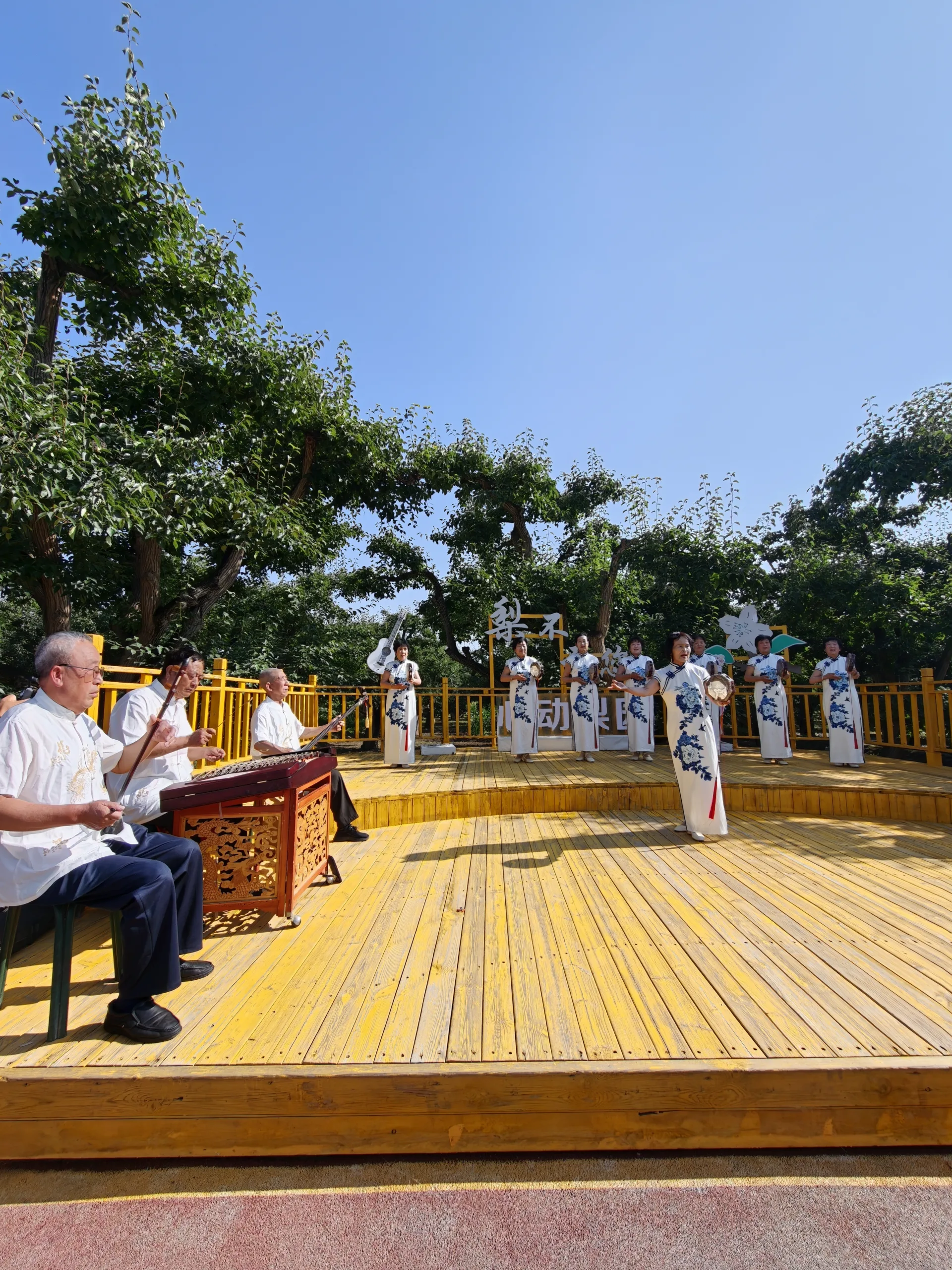
In Gansu province, China, a group of elderly farmers in Gaolan county are keeping alive the Guzi musical style, a folk tradition over a century old.
They perform with instruments like the sanxian, a three-stringed lute, and the yangqin, a hammered dulcimer, singing in the local dialect. The style originated in Lanzhou, the province’s capital, and gained popularity in teahouses and courtyards. After the founding of the People’s Republic of China in 1949, musicians began composing songs celebrating revolutionary heroes.
The farmers’ group includes Wei Zhou Jiang, who plays the yangqin, and singer Wang Keying. They perform songs like “Han Ying Meets Her Mother,” which tells the story of a woman visiting her mother while in detention during the 1930s armed struggle between the Communist Party and the Kuomintang. This piece honors the Lake Honghu Red Guards, a group that fought alongside the Red Army.
The group regularly performs at the ancient pear orchard in Shichuan district, Gaolan, during the county’s Pear Blossom Festival. They plan to teach younger generations to ensure the art form continues. In 2006, the Chinese government recognized Guzi as a national intangible cultural heritage, noting its roots stretch back to the Ming Dynasty and its later development incorporating musical styles from Beijing and Shaanxi province. The Guzi repertoire includes over 1,000 pieces divided into five main melodic types.