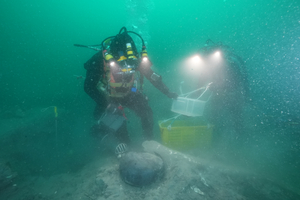
Archaeologists open a sealed wooden wardrobe in Pompeii from 79 C.E.
Headline and summary by local AI
Archaeologists at the House of Cornelius Maximus in Pompeii, Italy, opened a wooden wardrobe that remained sealed for nearly 2,000 years.
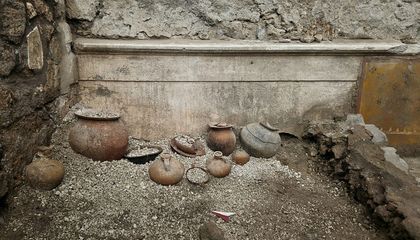
The team discovered a collection of personal and utilitarian items that provide a glimpse into the daily lives of the residents who lived in the city before the eruption of Mount Vesuvius. The wardrobe contained a variety of objects, including a bronze lamp, a pair of tweezers, a mortar for making makeup, and a glass bottle for perfume.
Researchers also found ceramic and bronze vessels used for cooking and dining. Among these items was a wooden box containing eight lead weights, which suggests that a merchant may have used them to balance scales for trade. The discovery also revealed a rodent problem in the home, as researchers found 117 bone fragments from field mice inside an amphora. One of the most distinct finds was a necklace known as a crepundium.
It featured at least 24 amulets made of glass, bone, and tin-glazed pottery, depicting various deities and body parts. Gabriel Zuchtriegel, the director of the Archaeological Park of Pompeii, noted that these items help reconstruct the personal habits and memories of the inhabitants. Experts believe the owners left the home in a hurry during the volcanic disaster, leaving behind 38 coins and a variety of treasures.
Selected and summarized by local AI How we work