European portrait analysis shows rising waist to hip ratios from 1650 to 1950
Headline and summary by local AI
Behavioral scientists at Northumbria University in England analyzed 486 European portraits created between 1650 and 1950 to track changes in historical beauty standards.
The researchers used these paintings as cognitive fossils to understand how psychological preferences and reproductive strategies shifted over three centuries. They recruited 1,500 participants to rate the attractiveness, age, and body proportions of the women depicted in the artworks. The study found that the perceived waist-to-hip ratio of the subjects increased over this period.
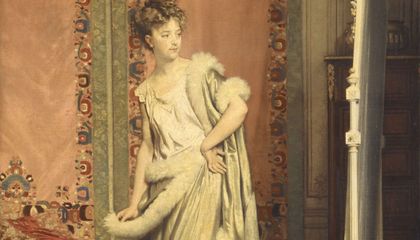
This ratio, which measures the waist circumference divided by the hip circumference, reached its lowest point in the mid-18th century. For example, a woman in a 1776 painting by Jean-Honoré Fragonard had a ratio of 0.51, while a woman in a 1873 painting by Pierre-Paul-Léon Glaize had a ratio of 0.72. Researchers suggest these changes may link to broader societal shifts such as women having children at older ages and pursuing more education.
While lower ratios are traditionally associated with youth and fertility, the upward trend persisted even when the researchers accounted for the perceived age of the subjects. One outside scientist noted that modern fashion models have seen very little change in proportions over the last 25 years, suggesting that the fashion industry may now shape body ideals more than social changes do.
Selected and summarized by local AI How we work