Scientists use genetic diversity to restore American elms after disease blight
Headline and summary by local AI
Researchers from the U.S. Department of Agriculture (USDA) and the Nature Conservancy are working to restore the American elm to forests and urban landscapes in New England.
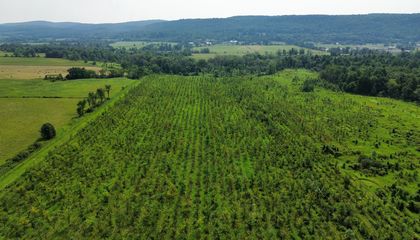
These scientists are currently conducting large scale experiments in Vermont to identify trees that can survive Dutch elm disease, a fungus that has killed more than 55 percent of the species in the United States.
The American elm became an iconic part of the American landscape in the 1800s because the trees could survive poor soil and urban pollution. At their peak, the USDA estimated that 77 million of these trees lined streets and public spaces. However, the fungus arrived in the United States in 1930 and began killing the trees on a national scale by the 1950s.
The disease blocks the water conducting vessels in the trees, causing the canopy to die and the tree to eventually perish. To combat this, Leila Wilson and her team are testing thousands of trees in Vermont and Ohio. They deliberately infect young elms with the fungus to see which ones survive. The goal is to find at least 30 genetically diverse trees to serve as the foundation for repopulating forests and floodplains.
These trees are vital because they stabilize streambanks and provide habitats for insects and birds. The researchers plan to use the survivors to create seed orchards. These orchards will produce seeds for new trees that can withstand both the fungus and future environmental changes. While some disease resistant cultivars already exist for homeowners, this project aims to provide a wider variety of genetic options to help restore the ecological role of the elm across the region.
Selected and summarized by local AI How we work
More in Recovery

Climate change threatens recovery of Hawaiian humpback whales
hawaiipublicradio.org · 20 Nov 2026
Researchers record pajonal cat in San Juan National Park for first time
noticiasambientales.com · 15 Nov 2026
Restoration efforts eradicate invasive rodents on a Pacific atoll
protothema.gr · 20 Nov 2026