Roman mourners buried toddler with ancient cup
Summary and headline written by AI from the source article. How we work
Nearly 2,000 years ago, people in Roman Britain buried a two- or three-year-old child with a ceramic cup and a rooster figurine near the modern town of Cirencester, England.
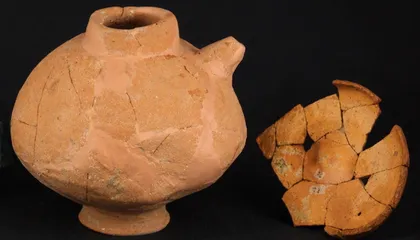
Archaeologists unearthed the grave in 2011 during excavations of a large Roman cemetery. The cup, called a “tettina,” functioned as a sippy cup for the child, and researchers believe mourners placed it in the grave to provide sustenance for the child’s spirit in the afterlife.
The cemetery contained 118 inhumations and eight cremation burials, with the child’s grave located just outside the cemetery walls. Emma Stuart, director of the Corinium Museum, explained that infant mortality was high in Roman times, and the tettina likely served to nourish the child’s spirit on its journey. The rooster figurine accompanied the cup, possibly representing Mercury, the Roman god believed to guide souls to the underworld.
The tettina was broken when discovered and remained in fragments until the Friends of Corinium Museum funded its restoration. About 120 similar artifacts have been found in Britain, and some show traces of animal milk, suggesting they were used to supplement or replace breastfeeding. Archaeologists suggest the presence of these items indicates the child came from a wealthy and loving family who carefully prepared for the child’s afterlife.