Shared gut microbes link foragers to ancient ancestors
Summary and headline written by AI from the source article. How we work
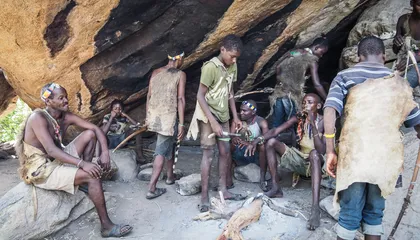
Researchers compared the gut bacteria of the Tsimane people of Bolivia and the Hadza people of Tanzania and discovered they share over 1,200 microbial species.
These two groups, despite living on different continents and having different diets, showed a remarkable similarity in their gut microbiomes. Scientists found that around 60 percent of these shared microbial strains are rare or absent in people living in industrialized societies.
The study, published in Nature, suggests that modern lifestyles have significantly reduced the diversity of gut bacteria compared to what humans carried thousands of years ago. Researchers used dating techniques to estimate the common ancestor of the Tsimane and Hadza microbiomes lived around 17,000 years ago, before the widespread adoption of agriculture. This timing suggests the Tsimane acquired their microbiome before their ancestors migrated to the Americas.
Justin Sonnenburg of Stanford University explained that human genomes may have evolved to expect specific microbes, and losing this diversity could create biological challenges. The researchers contrasted the gut flora of the Tsimane and Hadza with that of industrialized populations, finding a substantial gap in microbial strains. A previous study by Sonnenburg’s team showed a Californian resident’s gut contains an average of 277 microbial species, while a Hadza individual’s gut hosts 730.
However, some scientists caution against assuming the ancient microbiome is necessarily “better”. Andrew Moeller of Princeton University notes that modern gut bacteria may be well-suited to industrialized lifestyles, and further research is needed to determine the health implications of these microbial differences. Marie-Claire Arrieta of the University of Calgary agrees, stating that studying ancient microbiomes can help us understand lost microbial functions but doesn’t mean we should try to recreate them.