Ancient predator reveals early origins of mammalian traits
Summary and headline written by AI from the source article. How we work
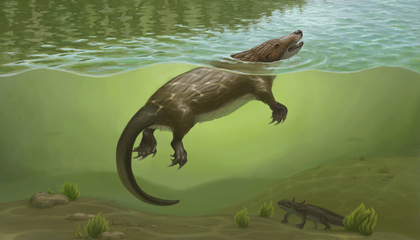
Researchers in China discovered a 165-million-year-old fossil of a previously unknown animal, Megacauda sungei, that combined features of a platypus and river otter.
The creature lived alongside dinosaurs in Inner Mongolia and weighed between two and four and a half pounds. CT scans of the remarkably well-preserved fossil revealed M. sungei possessed a modern throat structure with bony projections supporting the soft palate.
This structure allowed the animal to suckle milk from its mother and swallow food efficiently, unlike reptiles which rely on head-shaking to ingest meals. Scientists believe this adaptation enabled early mammal relatives to diversify their diets and evolve into various feeding strategies. The fossil also shows the presence of hyoid bones, which aid in swallowing and are common in modern mammals.
The discovery pushes back the timeline for the evolution of suckling behavior and suggests that the ability to feed young with milk existed in ancestors of mammals much earlier than previously thought. Megacauda sungei likely swam using its front legs for paddling, its tail for propulsion, and its hind legs for steering, representing the earliest known evidence of an aquatic lifestyle in the mammal lineage.