Ancient fossil reveals small dinosaur inhabited coastal Japan
Summary and headline written by AI from the source article. How we work
Researchers in Japan identified a 90-million-year-old fossil as belonging to a small iguanodontian dinosaur, expanding knowledge of dinosaur life along ancient coastlines.
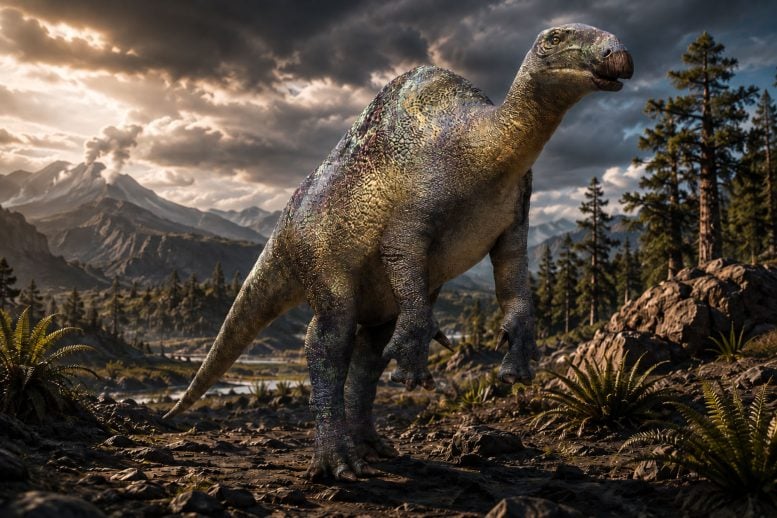
The fossil, originally found in 1999 at the Iwaki City Ammonite Center in Fukushima Prefecture, was re-examined and determined to be a sternal plate, a breastbone, from a styracosternan, a group of plant-eating dinosaurs. Previous discoveries in Japan indicated iguanodontians lived in coastal areas of eastern Asia during the Late Cretaceous period.
However, the fossil record has been incomplete, with most finds consisting of isolated bones rather than full skeletons. This new specimen is significant because it represents a dinosaur approximately 3 meters long, much smaller than the 8-meter-long iguanodontians already known from the same area. The discovery of an iguanodontian with a smaller body size adds to evidence that a variety of dinosaurs lived together in these coastal environments.
These dinosaurs moved between Asia, North America, and Europe, and fossils from Japan help scientists understand how the group spread and evolved across the ancient continent of Laurasia.