Drought and better boats triggered Polynesian migration to the Pacific
Headline and summary by local AI
Researchers from the University of Southampton and the University of East Anglia identified a severe drought as a primary driver for the sudden expansion of Polynesian voyagers across the Pacific Ocean.
The study addresses a period known as the Long Pause, during which Polynesian ancestors settled in Samoa and Tonga around 3,000 years ago but stopped expanding eastward for approximately 1,700 years. Between AD 900 and 1050, this expansion resumed rapidly.
Within roughly 250 years, voyagers reached and settled islands including Tahiti and Hawai’i, eventually reaching the continental Americas. Geochemical analysis of ancient mud from Samoa, Tonga, French Polynesia, and the Cook Islands revealed that the Long Pause ended when Samoa and Tonga experienced their driest conditions in 2,000 years. Climate modeling showed that shifting tropical rain belts moved eastward, reducing rainfall in the homeland islands while making eastern islands wetter.
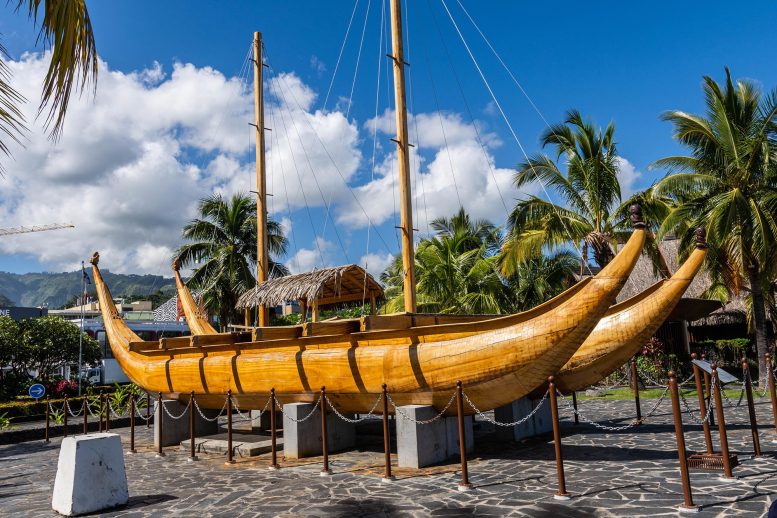
This environmental shift likely forced communities to move to find freshwater and food. The researchers also noted that growing populations and technological progress played roles in the migration. Sailors likely improved their voyaging canoes by moving from U-shaped to V-shaped hulls and developing better rigging. These advancements helped them sail against prevailing winds to reach new lands.
Selected and summarized by local AI How we work