Mineral varnish helped preserve 37,000-year-old cave art in France
Headline and summary by local AI
Philippe Walter and his colleagues used ultraviolet fluorescence spectroscopy to study 37,000-year-old charcoal drawings in the Chauvet Cave in southeastern France.
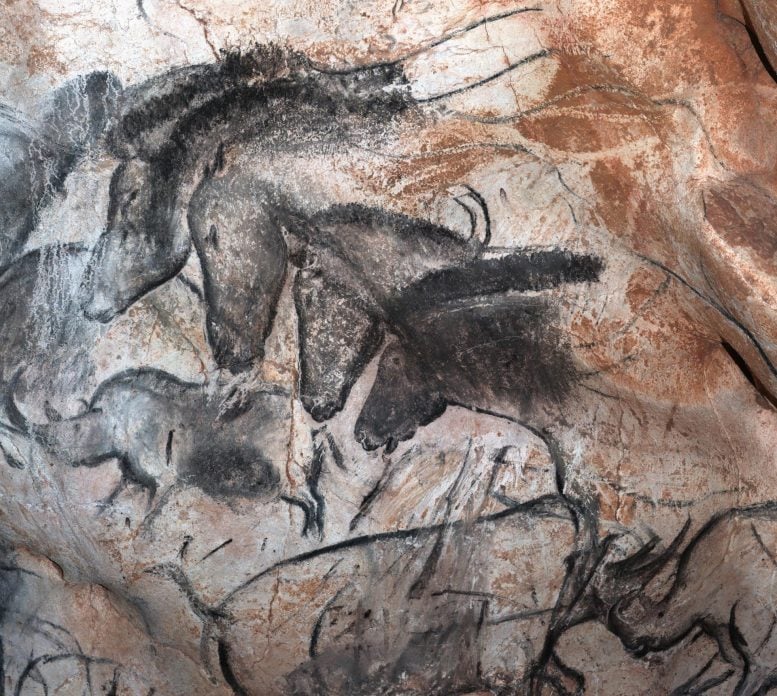
The research team aimed to understand how the cave's geology helped protect the Paleolithic artwork, which includes depictions of horses, bison, cave lions, and cave bears. The researchers used a portable spectrometer from a protective walkway located about 8 feet from the walls to avoid touching the site.
This method allows them to examine the cave without disturbing fragile prehistoric footprints. By shining a UV beam on the walls, the team identified different mineral deposits that are invisible to the naked eye. The study revealed that thin layers of calcite, which formed from water flowing over the limestone, created a natural varnish over parts of the drawings.
The team also detected orange fluorescence in some areas, which may indicate where prehistoric artists rubbed hot charcoal or lit torches against the stone. The researchers plan to apply this imaging technique to other fields, such as forensic science and monitoring biofilms on the International Space Station. A project to use this method for tracking microorganisms in space is already in progress.
Selected and summarized by local AI How we work