Zimbabwe’s dinosaurs show unique evolution
Summary and headline written by AI from the source article. How we work
An international team of paleontologists working in Zimbabwe discovered that the dinosaurs living there around 210 million years ago were different from those in neighboring South Africa.
The researchers, including experts from the University of the Witwatersrand in Johannesburg, excavated fossils from the shores of Lake Kariba, a reservoir on the border between Zimbabwe and Zambia. They used a houseboat as a mobile base for two expeditions in 2017 and 2018, recovering fossils from ancient river sediments.
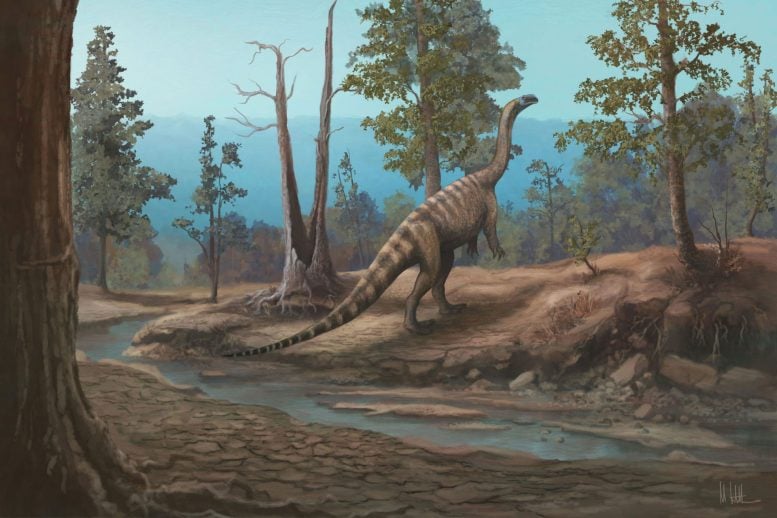
The team identified a new sauropodomorph dinosaur, Musango matusadonaensis, which walked on two legs, grew to 4.5 meters long, and weighed 220 kg. They also re-examined older fossil collections from Bulawayo, Zimbabwe, and found that many specimens previously assigned to South African species were actually unique. These discoveries suggest that Zimbabwe hosted a distinct dinosaur community, separate from that of South Africa. Scientists believe climate differences, with Zimbabwe being closer to the equator, may explain this divergence.
The team plans to return to Kariba to gather more fossils and refine their understanding of the region's ancient environment and its effect on dinosaur evolution.