New dinosaur species discovered after century in museum
Summary and headline written by AI from the source article. How we work
Researchers at University College London identified a new dinosaur species, Invictibellatrix amberina, from a 120-million-year-old fossil found on the Isle of Wight in Britain.
The skull fragment, overlooked in the Natural History Museum’s collection since 1924, represents the first known European megaraptoran, a group of agile, two-legged predators related to tyrannosaurs.
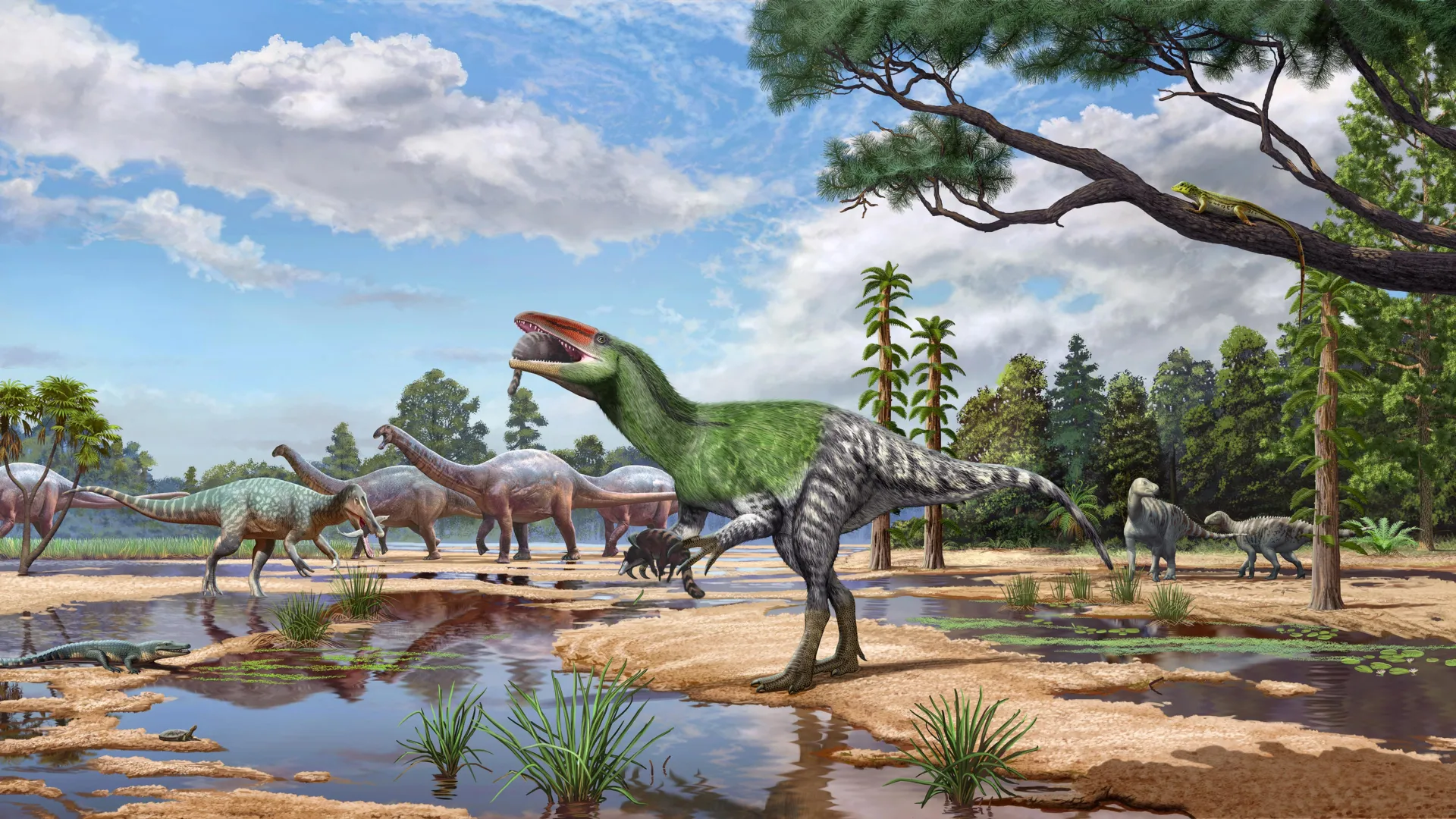
Unlike T. rex, megaraptorans relied on powerful arms and large curved claws to hunt, and Invictibellatrix was about three to four meters long, potentially preying on small dinosaurs, lizards, and mammals. The discovery helps solve a mystery about megaraptoran evolution. Scientists previously believed these dinosaurs originated in Asia and spread through Europe to Gondwana, the ancient southern supercontinent. The finding of a European megaraptoran confirms this migration route, showing Europe played a role in their dispersal.
Researchers used CT scans to reconstruct the dinosaur’s brain cavity and compare its anatomy to other species, identifying unique features that distinguished it as new. The team also used computer models to trace megaraptoran evolution, finding they thrived in Gondwana, becoming enormous predators with claws up to 35 centimeters long, while disappearing from northern continents. The name Invictibellatrix amberina means “unconquered female warrior” and honors both the amber found with the fossil and provides a message of empowerment.