Largest T. rex’s broken rib reveals ancient healing
Summary and headline written by AI from the source article. How we work
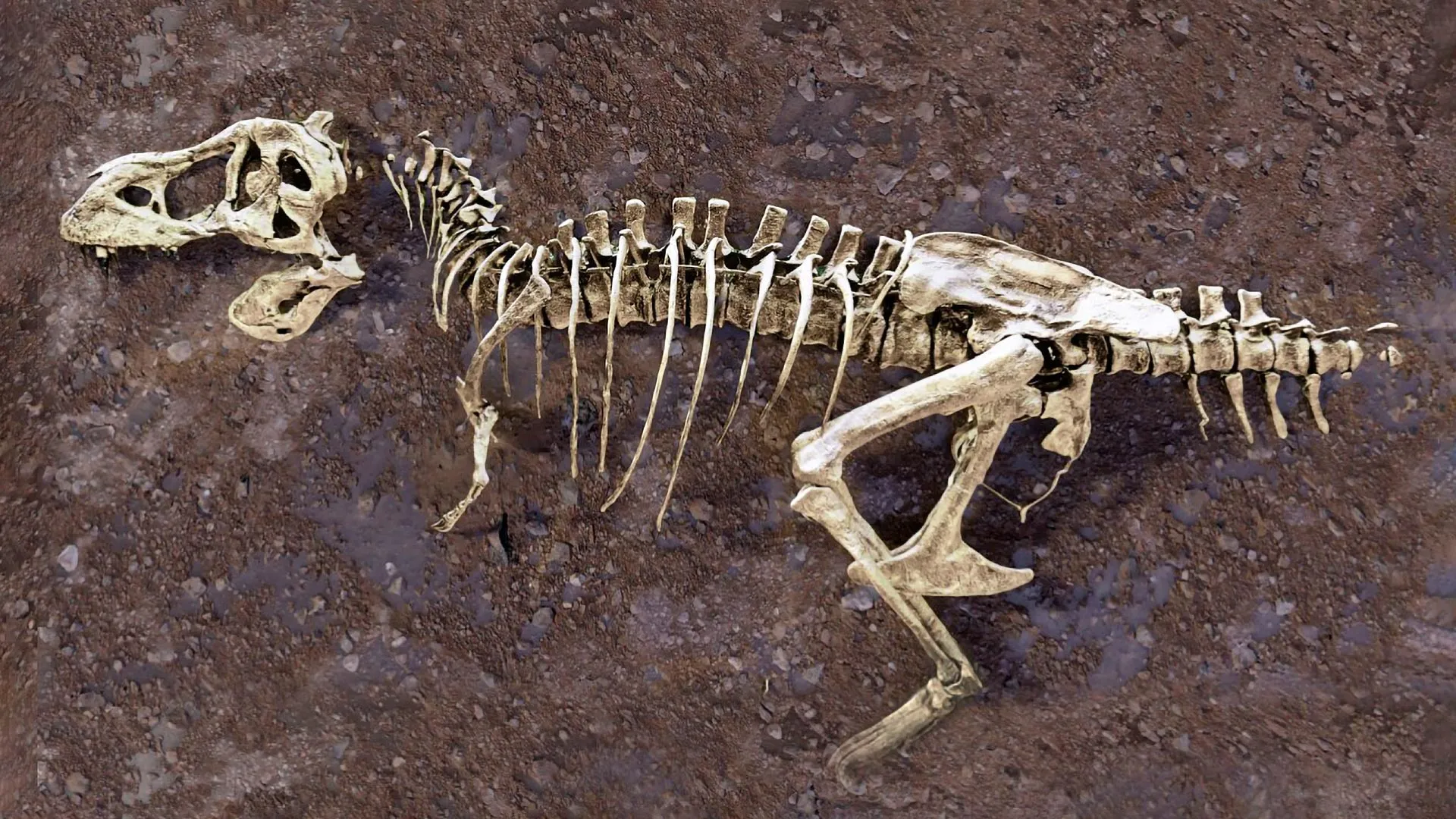
Scientists in Canada and at Oak Ridge National Laboratory in the United States studied Scotty, the largest known Tyrannosaurus rex skeleton, and discovered a network of fossilized blood vessels within a fractured rib.
Researchers used neutron and X-ray imaging to examine the 66-million-year-old bone without causing damage, revealing evidence that the injury was in the process of healing when the dinosaur died.
The team initially detected the blood vessels using X-ray scanning in 2020, then used neutron imaging at ORNL’s High Flux Isotope Reactor and Spallation Neutron Source to confirm their findings and gain further detail. Neutrons proved particularly effective at highlighting soft tissues, complementing the information obtained from X-rays. The rib’s location in a salty marsh aided preservation by slowing decomposition. This discovery is rare because soft tissues typically decay before fossilization can occur.
The preserved blood vessels show new vessels forming after the fracture, indicating the dinosaur’s body was actively attempting to repair the damage. Researchers hope to apply this imaging technique to other fossils to uncover hidden details about ancient injuries and biological processes, and to compare healing patterns across different species.