Scientists find 98-million-year-old mantis with leaf mimicry
Headline and summary by local AI
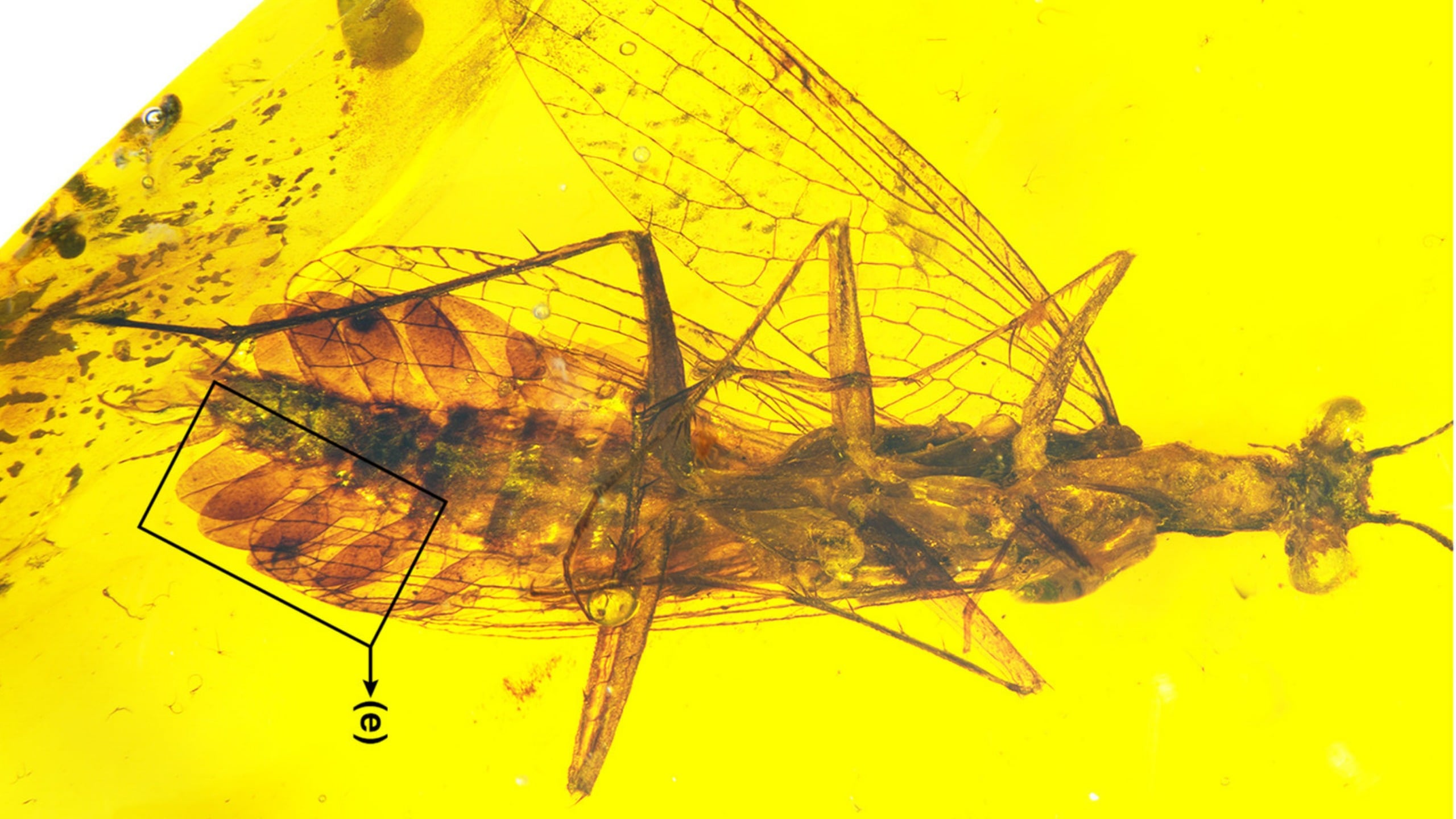
Paleoentomologists identified a 98-million-year-old praying mantis trapped in amber from Myanmar.
The researchers published their findings in the journal New Phytologist, naming the prehistoric insect Folimantis hyalinala. The insect provides the earliest clear evidence in the fossil record of a praying mantis mimicking plant leaves. Its abdomen resembles the extinct plant Selaginella grimaldii, a species also found in amber from the same region.
While many modern mantises have evolved to resemble flowers or leaves to hide from predators and ambush prey, this fossil shows that such mimicry was already a part of the mantid evolutionary toolkit during the mid-Cretaceous period. The researchers note that Folimantis hyalinala only displays leaf-like features on its abdomen. This specific trait may suggest that plant mimicry began at the rear of the body before evolving to include other parts like the thorax or wings.
The study also connects this discovery to the broader history of insects and plants, noting that both groups have been co-evolving for hundreds of millions of years. The specimen was donated to the insect evolution lab at Capital Normal University in Beijing by a collector in 2015.
The article notes that the amber trade in Myanmar is currently tied to sociopolitical turmoil, leading some organizations to call for a moratorium on publishing research from specimens obtained from that region after 2021.
Selected and summarized by local AI How we work