Dinosaurs used compost to hatch eggs in cold Patagonia
Summary and headline written by AI from the source article. How we work
Paleontologist Kohei Tanaka of the University of Tsukuba in Japan led a team that discovered over 250 fragments of dinosaur eggs in the Chorrillo Formation of Patagonia, a region in southern Argentina.
These eggs represent the southernmost dinosaur eggs ever found, dating back to the Upper Cretaceous period. The researchers determined the area was roughly equivalent to modern-day New York in terms of climate, but the dinosaurs faced a challenge in keeping their eggs warm during the short winter days.
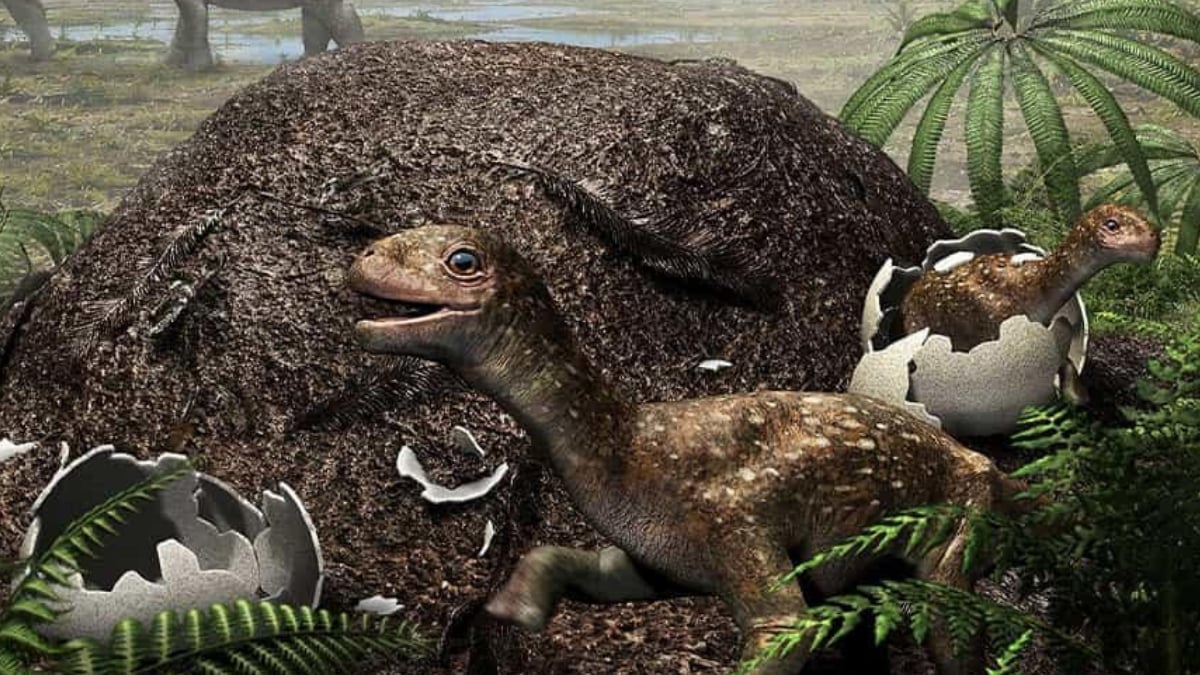
Titanosaurs, large long-necked sauropods, likely laid the soccer ball-sized eggs, known as Fusioolithus. The team proposes these dinosaurs built mound-style nests and relied on the heat generated by decaying plant matter, similar to modern saltwater crocodiles and brushturkeys. The dinosaur eggshells had unusually large pores, which would allow for increased oxygen flow needed for eggs buried in a compost heap. Previous findings showed a connection between porous eggshells and fully buried nests.
Sunlight alone likely would not have provided enough warmth at this high latitude, and there is no evidence of geothermal activity in the area that could have helped. Tanaka and his team believe microbial decay within these mounds was the primary source of heat needed to incubate the eggs over the long months it took for the dinosaur embryos to develop.