Ancient seafloor canyons preserved early animal fossils in Australia
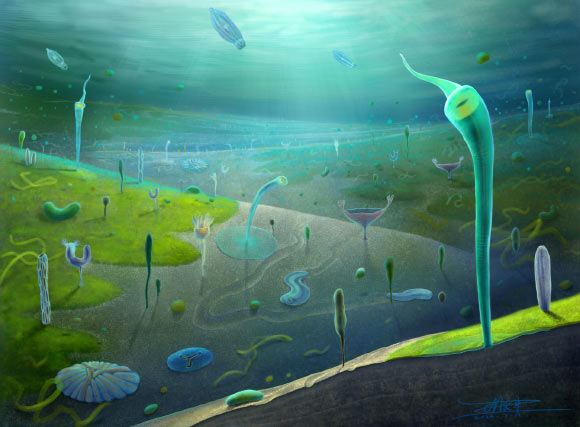
Headline and summary by local AI
Researchers from Adelaide University discovered that ancient underwater canyons helped preserve some of the world's oldest animal fossils in South Australia.
The team studied the Ediacara Member, a rock layer in the Flinders Ranges that contains a diverse collection of fossils from the Ediacaran period. These fossils represent the soft-bodied imprints of some of the first animals to live on Earth more than 540 million years ago.
The scientists analyzed over 3,000 m of rock sections and used satellite elevation models to map the terrain. They identified deep valleys oriented to the southeast, some reaching 280 m deep and spanning nearly 6 km wide. The researchers found broken rock fragments and sediment from underwater landslides at the base of these valleys. They concluded that rivers alone could not have carved such deep features.
The team suggests that these valleys formed as underwater canyons when global sea levels were low, with rivers on a briefly exposed shelf helping to shape them. A rapid rise in sea levels then flooded the area and filled the canyons with sediment. This process buried the seafloor and protected the organisms from storm waves, creating a specific environment where soft-bodied creatures could be preserved. Similar rock patterns in Eastern Europe suggest these sea-level changes may have occurred globally.
Selected and summarized by local AI How we work
Discovery: Archaeology, new knowledge of art, culture and history, forgotten history uncovered, something lost restored.


