Fossil feather in amber reveals stepwise evolution of flight structures
Headline and summary by local AI
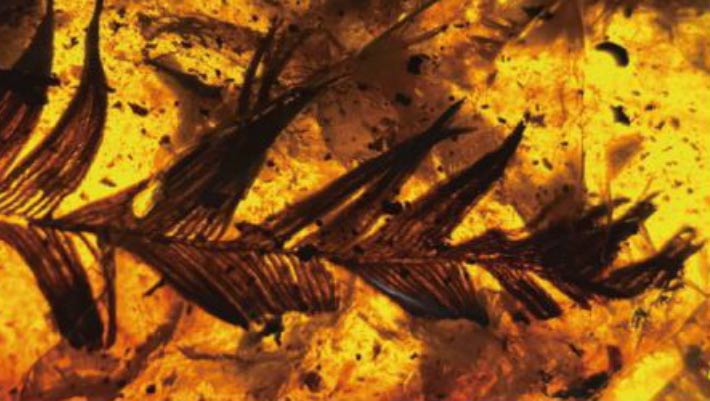
Professor Shuo Wang and colleagues at East China Normal University analyzed a 99 million year old pennaceous feather preserved in Burmese amber from Myanmar.
The researchers examined the specimen, known as ECNU A0033, which was donated to the university museum by an amateur collector in 2016. This feather represents the longest three-dimensionally preserved example of its kind found to date.
The team discovered that while the feather possesses a large, symmetrical shape similar to modern flight feathers, its internal structure lacks key aerodynamic features. Specifically, the tiny branches called barbules do not have the hooklets required to interlock and create a continuous surface. Additionally, the central shaft, or rachis, is not a solid hollow tube but an open structure. Computer simulations showed that these traits made the feather much more flexible under airflow than modern feathers.
These findings suggest that the evolution of feathers happened in stages rather than all at once. The researchers concluded that dinosaurs developed long feathers and symmetrical vanes before they evolved the interlocking hooks and internal tissue differentiation needed for efficient flight. The team also identified dark pigments in the fossil, suggesting that muted colors were common among early feathered dinosaurs and birds.
The researchers could not identify the specific animal that owned the feather because no skeletal remains were found with the amber.
Selected and summarized by local AI How we work
Discovery: Archaeology, new knowledge of art, culture and history, forgotten history uncovered, something lost restored.