Oldest Iberian dinosaur identified from single vertebra
Summary and headline written by AI from the source article. How we work
Researchers Rui Tiago dos Santos-Matos and Octávio Mateus of Universidade Nova de Lisboa discovered a dinosaur vertebra in the Algarve region of southern Portugal.
The fossil, measuring 37 millimeters long, comes from rocks dating back over 220 million years to the Late Triassic epoch. This find marks the first dinosaur remains from the Triassic period on the Iberian Peninsula, a region encompassing Spain and Portugal.
Prior to this discovery, paleontologists in Portugal primarily found fossils of animals that lived in or near water, such as amphibians and fish. The newly identified vertebra represents the first evidence of a land-dwelling vertebrate from this period in the region. The researchers compared the bone to vertebrae of early dinosaurs and relatives, then used an expanded dataset with 13 new characteristics to analyze its evolutionary relationships.
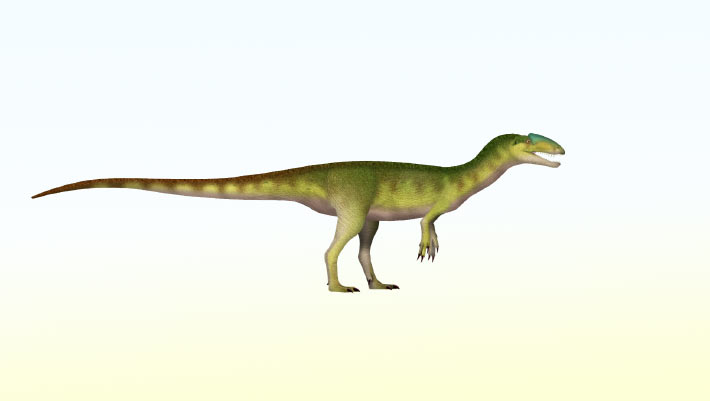
Their analysis suggests the specimen belongs to the neotheropods, an early group of predatory dinosaurs, and is most closely related to Sarcosaurus woodi, a species found in England. If this placement is confirmed, the Portuguese vertebra would be among the oldest neotheropods ever discovered.
While the bone is at least 20 million years older than Sarcosaurus woodi, the researchers cannot yet assign it to a known species or create a new one due to its fragmentary nature and lack of unique features.

