Galaxies collide in image named by Hawaiian students
Summary and headline written by AI from the source article. How we work
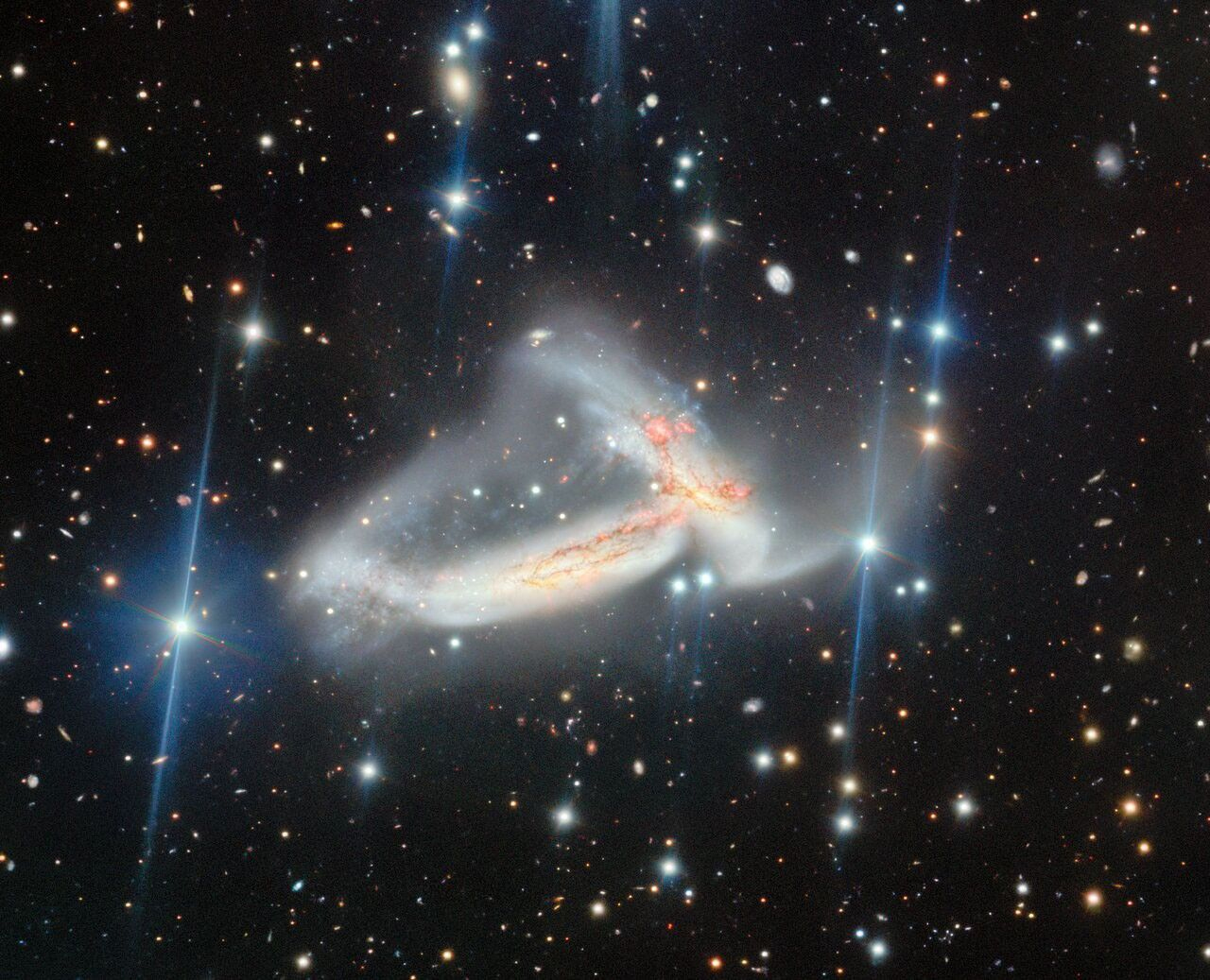
High school students participating in the Project Hōkūlani internship program named an image of two colliding galaxies NGC 7253A and NGC 7253B, located 200 million light-years away.
The students, working with astronomers at the Gemini Observatory and the University of Hawai’i, selected the image and gave it the Hawaiian name Nā ʻUhane Māhoe Huki Pū i ke Ola, meaning “The Twin Spirits Pulling Together Creating Life.” They chose this particular pair of galaxies because it appears within the Hawaiian constellation Ka Lupe o Kawelo, associated with the legendary hero Kawelo.
The students observed the galaxies using the Gemini North telescope on Mauna Kea in Hawai’i, a location ideal for astronomy due to its altitude and clear conditions. NGC 7253A and NGC 7253B are merging over billions of years, a process that involves gas clouds colliding and forming new stars. Astronomers believe that our own galaxy will eventually collide with another galaxy as well, though this event is still billions of years in the future.
Unlike expectations of star and planet impacts, galactic collisions primarily involve gas clouds compressing and triggering star formation.