New analysis of the Taung child skull suggests diverse hominin evolution
Headline and summary by local AI
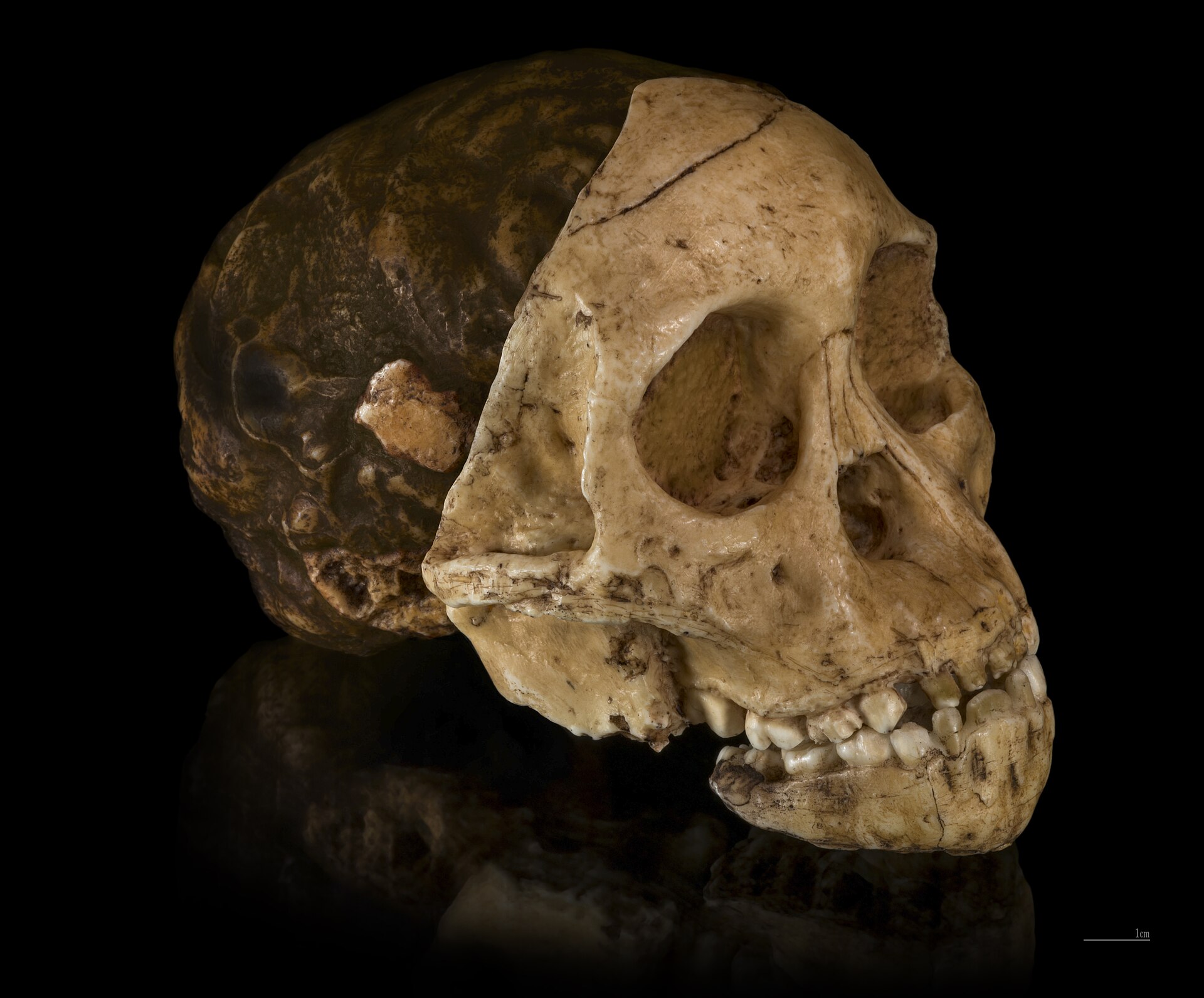
An international team of paleobiologists reexamined the Taung child skull, a famous 1924 discovery from South Africa that served as the standard for the Australopithecus species.
The researchers compared the mineralization of the skull's teeth against chimpanzees, gorillas, and humans to determine the age of the individual. They concluded the skull belonged to a child rather than a juvenile. Further analysis of the dentine-enamel junction suggested the skull shares traits with Paranthropus robustus, an ape-like ancestor that appeared after Australopithecus.
By comparing the braincase of the Taung child to other digitally reconstructed skulls from the same region, the team found significant differences in size and shape. These results suggest that the skull might have grown into a hominin resembling some local specimens but not others. The researchers argue that grouping these different fossils under a single species may overlook the actual diversity of the era. The team linked this diversity to the paleoclimate of the region.
They theorize that wet and dry cycles forced hominin populations to expand and contract, leading to interbreeding and divergence as they faced new predators and pathogens. Gabriele Macho of Vrije Universiteit Brussel stated that these findings suggest the human family tree was a chaotic, tangled bush driven by climate shifts rather than a straight trunk.
Selected and summarized by local AI How we work
Discovery: Archaeology, new knowledge of art, culture and history, forgotten history uncovered, something lost restored.