New dinosaur species found in museum after a century
Summary and headline written by AI from the source article. How we work
Researchers at University College London identified a new species of predatory dinosaur after revisiting a fossil collected on the Isle of Wight, England, in 1924.
The fossil had been stored in the Natural History Museum in London for nearly 100 years before the team examined it using micro-CT scanning to create 3D models of its braincase.
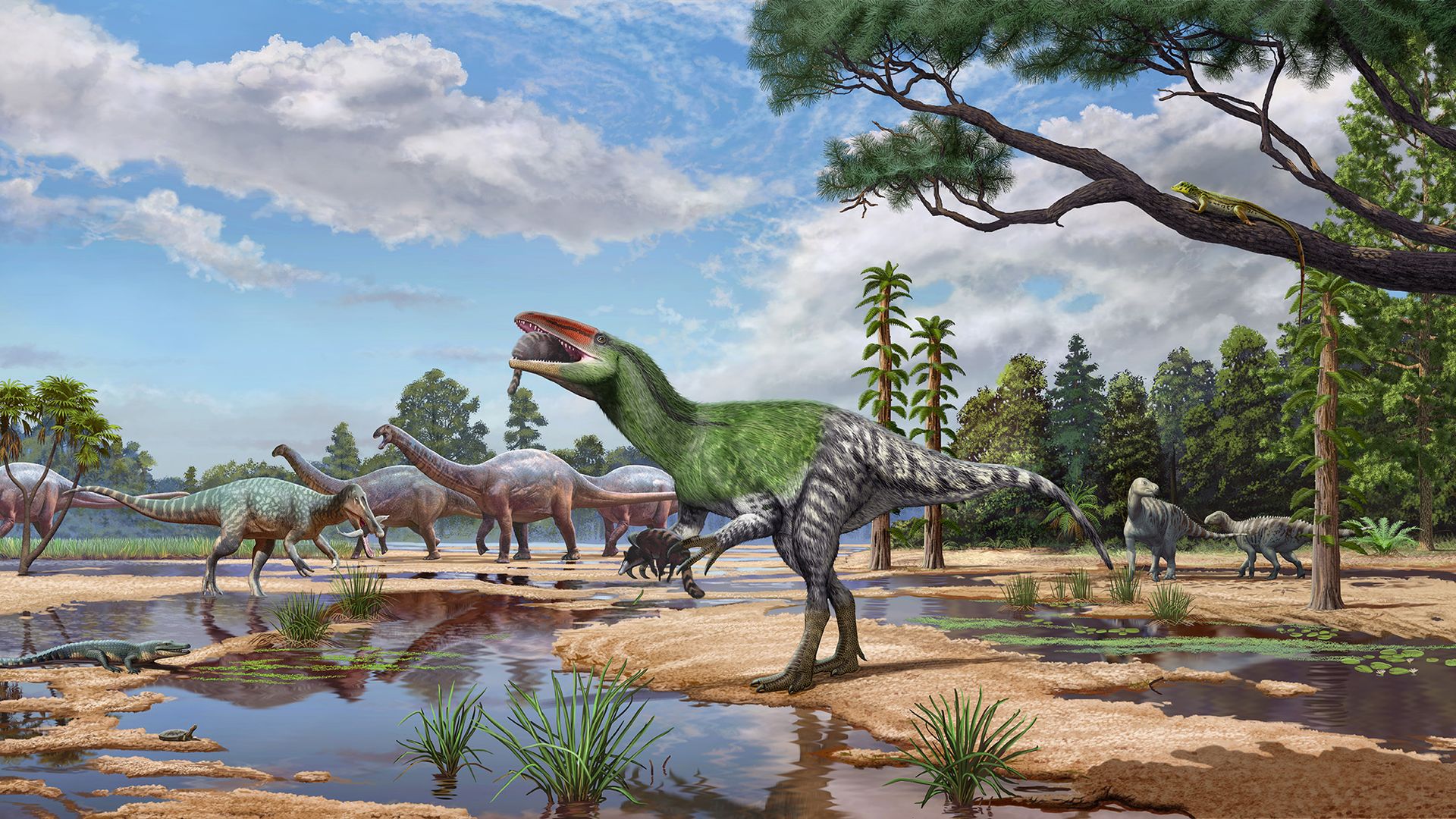
They determined the dinosaur, named Invictibellatrix amberina, belonged to the megaraptor family, two-legged carnivores related to tyrannosaurs that used their arms and claws for attack. This discovery marks the first identification of a megaraptor in Europe, filling a gap in the fossil record and providing evidence for how these dinosaurs spread across the globe.
Scientists believe megaraptors originated in Asia and migrated to Europe around 130 million years ago, eventually reaching Gondwana, the ancient supercontinent that included South America, Africa, and Antarctica. I. amberina was relatively small for a megaraptor, reaching about 10 to 13 feet long and weighing between 440 and 660 pounds. Though its arms and claws were not preserved, researchers estimate the claws could have grown to 8 inches long.
The team suggests this dinosaur was feathered and, despite not being an apex predator, would have posed a threat to humans. Further research on similar fossils may reveal more about the megaraptors’ evolutionary history and eventual disappearance from northern regions.